
Blog
Learn more about our latest innovations, scientific breakthroughs and industry news.
Latest stories
-

SRI-led collaboration supports teachers in nurturing early math success
A new toolkit produced by SRI and released by the Institute of Education Sciences will help teachers incorporate evidence-based math instruction for young students.
-

The New York Times talks with SRI ahead of Apple’s developer conference
Apple’s Siri is on the cusp of a major upgrade. The technology was born at SRI.
-
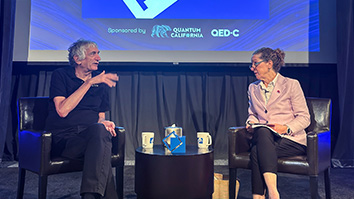
PARC Forum: Nobel laureate John M. Martinis on the quantum frontier
QED-C executive director Celia Merzbacher and Martinis discuss innovation and the road to scalable quantum systems.
-

SRI spinout Zerker Labs is building trust and verification products for the agentic economy
Zerker’s agent and media verification platform provides a foundational layer of trust that allows AI systems to safely act, transact, and decide.
-

Quantum beyond computing
From sensing to networking to ecosystem development, SRI’s work in quantum innovation reaches beyond quantum computing.
-

Quantum networking is moving out of the lab
Researchers are harnessing quantum behavior to create secure networks that will define the next communications era.
-
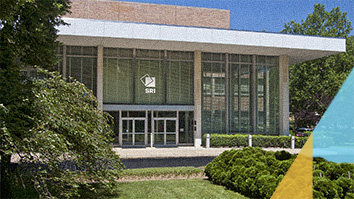
SRI’s Princeton campus to host HAX Plasma Forge
The new venture program, focused on plasma science, will join an innovation ecosystem where SRI is advancing AI, quantum, photonics, and other next-generation technologies.
-

SRI tapped by Japanese government to establish venture initiative and attract researchers
Japan’s Global Startup Campus Initiative aims to promote innovation acceleration for deep technology startups making a global impact.
-

SRI Appoints Dimitra Vergyri as President of Information and Computing Sciences Division
AI and speech technology leader brings more than two decades of experience to her new role.
-

Peter Neumann saw the Internet’s dangers before the Internet existed
A tribute to SRI’s pioneering computer scientist, Peter G. Neumann, PhD, whose life’s work defined the field of computing risk.
-

How SRI’s data expertise is improving special education
SRI Education researchers provide administrators and policymakers with the context they need to make informed decisions about special education services.
-

Celia Merzbacher: Fostering collaboration to advance the quantum industry
As the executive director of the Quantum Economic Development Consortium, Merzbacher plays a pivotal role in moving the quantum ecosystem forward.
-

SRI addresses the rural healthcare gap with AI innovation
SRI researchers are building an AI-driven system designed to upskill clinicians and transform rural healthcare delivery.
-
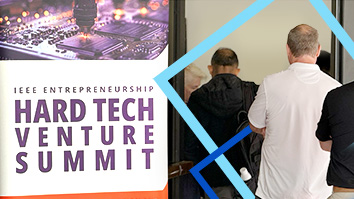
Cultivating hard tech startups that scale
IEEE’s Hard Tech Venture Summit convened innovators at SRI to refine strategies and build new networks.
-
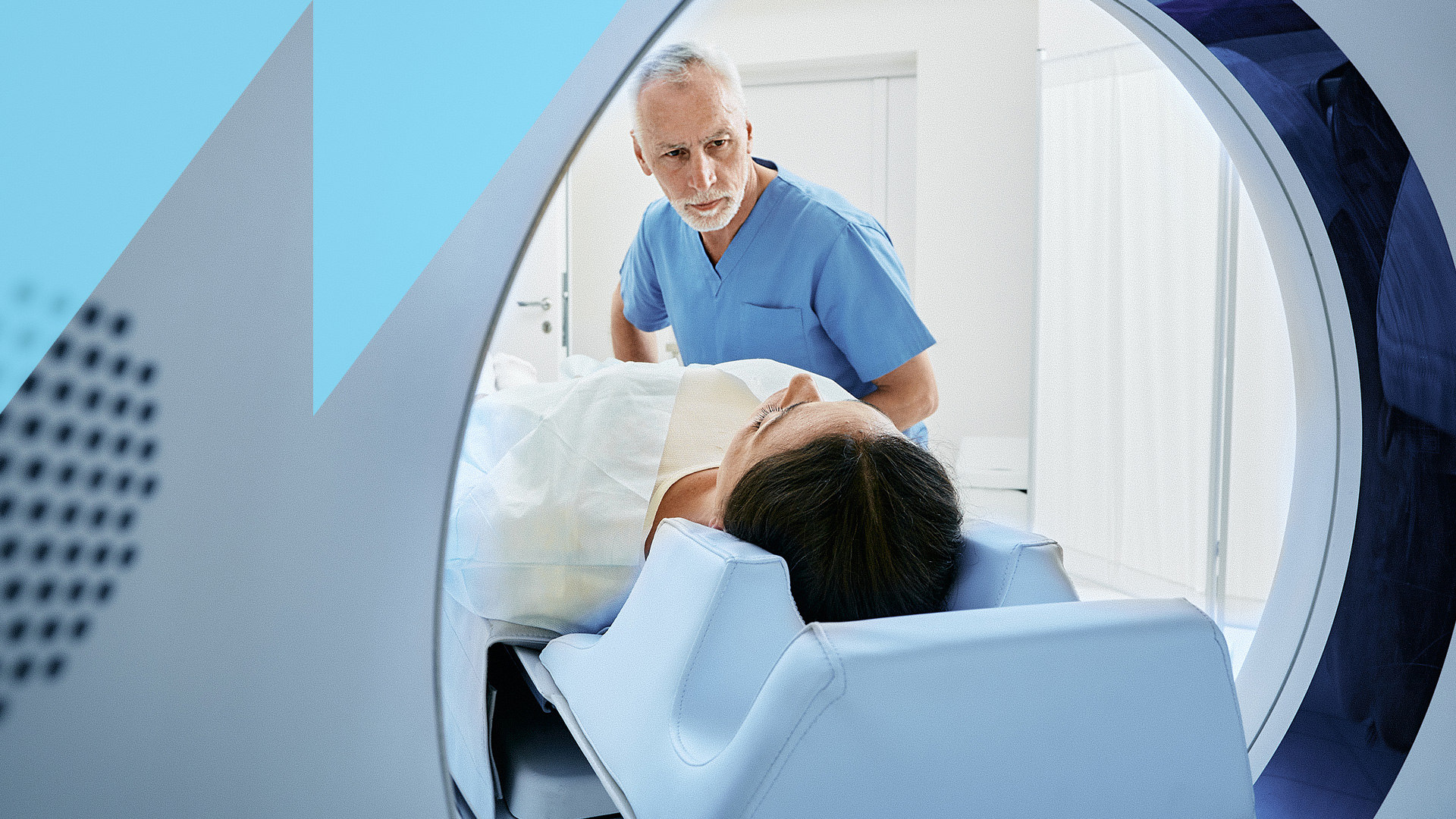
Bringing surgical tools inside the MRI
Drawing on SRI’s unique innovation ecosystem, the startup Medical Devices Corner is seeking to improve cancer surgery by advancing MRI-safe teleoperation.
-

PARC Forum: How to AI
The Wall Street Journal tech columnist Christopher Mims and SRI Education’s Susan Patrick discuss how AI can strengthen human agency.
-
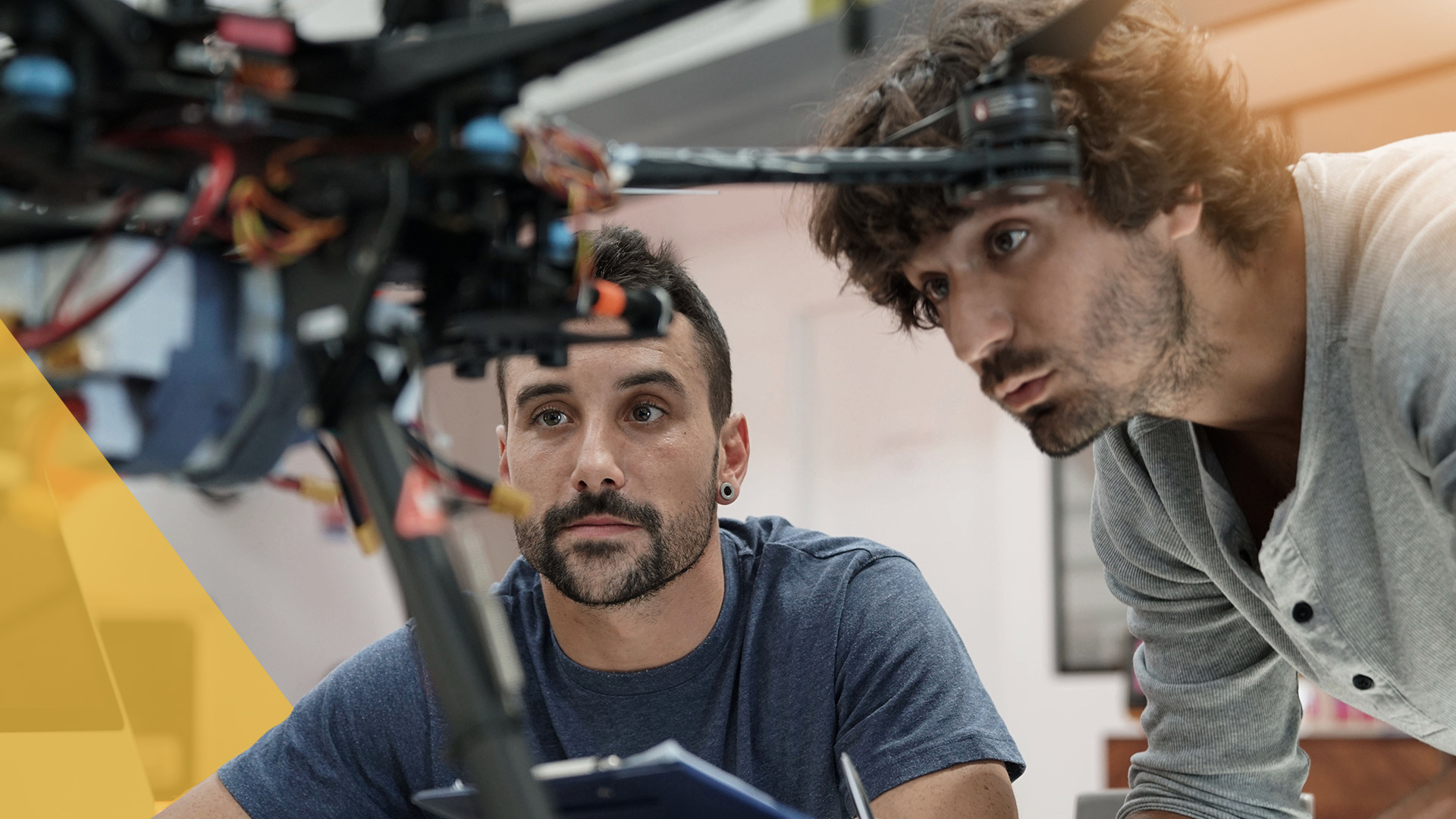
Meet the startups reinventing the defense innovation playbook
The SRI-hosted Deep Tech Security Accelerator demonstrates what can happen when battle-tested innovation meets the right ecosystem.
-

The greatest U.S. breakthroughs (thanks to SRI)
The Wall Street Journal asked readers to rank the U.S. inventions that most impacted society. SRI played a foundational role in four of the top 15.
-

Designing better human-machine teams
SRI is discovering how AI can organize humans and machines into complex, collaborative, high-functioning units.
-

Earth Day at SRI: How science can sustain a changing planet
From foundational smog research to new work on carbon capture, SRI has continuously turned science into environmental impact.
-

Where is AI taking us?
As the co-chair of Stanford’s AI Index Steering Committee, SRI’s Ray Perrault shapes a monumental annual effort to document the global AI ecosystem.
-

Nicole Heidel: Charting the future of photonic chips and quantum hardware
As the director of SRI’s Applied Sciences Laboratory, Heidel leads a team that turns deep science into real-world solutions.
-
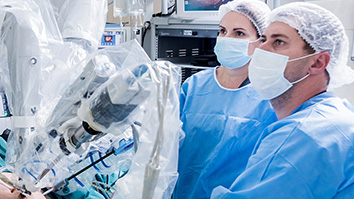
The SRI research behind today’s surgical robotics
Intuitive’s da Vinci 5 system represents a major leap in robotic-assisted medicine. It all started at SRI, which continues to advance teleoperation technologies.
-

A banner year for quantum
SRI-managed QED-C’s annual report on quantum trends captures an industry accelerating rapidly from technical promise toward major global impact.
-

An SRI carbon capture experiment launches into space
By synthesizing carbon-absorbing aerogels in microgravity, SRI research will give us a rare glimpse into how these materials could be radically improved.
-

Stanford celebrates a world-changing SRI invention
Spotlighting Douglas Engelbart’s invention of the computer mouse, Stanford Magazine revisits a moment when SRI transformed computing forever.
-

Why quantum assurance matters
New SRI research seeks to secure the future of quantum innovation by extending software assurance capabilities from classical computers to quantum information systems.
-

PARC Forum: The future of defense technologies
Silicon Valley is paying close attention to the defense sector. SRI convened a conversation exploring new opportunities to advance security through innovation.
-

Cale Gentry: Steering light, tracking lasers, and going quantum
Gentry explores how SRI research is pushing the envelope of photonics, optics, and quantum technologies.
-

Raising young children alongside companion AIs: Are we ready for the consequences?
SRI’s Todd Grindal makes the case for putting child development science at the center of AI design.
-

QED-C delivers a multi-year quantum supply chain project
The SRI-managed Quantum Economic Development Consortium contributes new approaches to control and readout systems, which will accelerate quantum manufacturing.
-

Delivering the technologies that keep America safe
From the ARPANET to National Guard training to advances in digital lowlight imaging, SRI has made monumental contributions to national defense.
-

Catching the rhythms of women’s health
The menstrual cycle has numerous biological effects on women. New SRI research asks: Could a better understanding of these patterns improve healthcare for women around the globe?
-
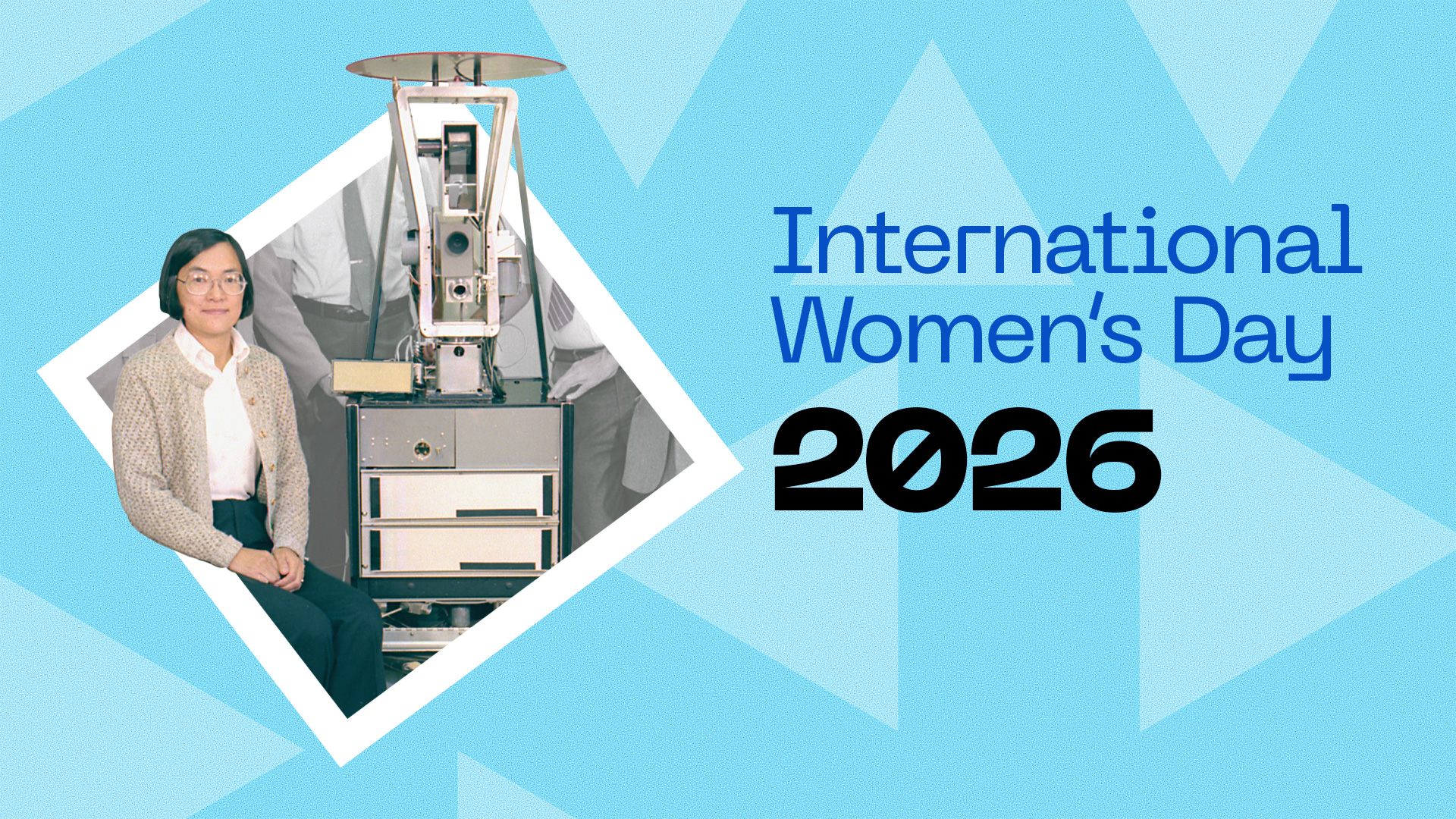
SRI celebrates International Women’s Day
To recognize International Women’s Day, SRI shares the stories of four women whose work delivered fundamental advances in computer science.
-

The hidden cost of springing forward
Daylight Savings Time is more than just an hour lost. How can we better prepare ourselves?
-
SRI becomes a founding member of the OCUDU Ecosystem Foundation
Hosted by the Linux Foundation, the OCUDU Ecosystem Foundation will build an open-source, AI-native software stack for 5G and early 6G Radio Access Networks.
-
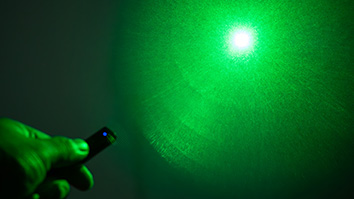
Where do laser beams originate?
To mitigate the dangers that lasers pose to civilian and military targets, SRI is leveraging photonic circuits to pinpoint the origin points of laser beams.
-

SRI advances trustworthy data exchange across disparate healthcare systems
Helping systems talk to each other increases patient safety, lowers costs, reduces errors, and streamlines treatment.
-

SRI radar innovation supports NASA mission to study the northern lights
By providing data from the SRI-operated Poker Flat Incoherent Scatter Radar, SRI scientists are helping NASA better understand the electrical currents in ionospheric plasma.
-
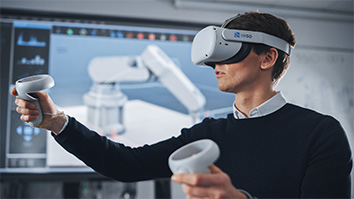
Inside Startups goes deep inside one of the most advanced robotics labs in Silicon Valley
Three SRI projects show how robots can improve cancer treatment, accelerate teleoperation, and learn through AI.
-

SRI joins an ambitious NIH effort to improve autism care
The institute’s work on the Autism Data Science Initiative aims to advance our understanding of what positive autism care outcomes look like and how they can be achieved.
-

Pedro Sequeira: Bridging the gap between humans and machines
Working in SRI’s AI Center, Sequeira creates autonomous systems that learn, reason, and adapt under uncertainty.
-

SRI research helps improve reading comprehension instruction
The74 highlights SRI’s vital work helping urban school districts unlock the full value of “science of reading” approaches.
-

SRI’s Natarajan Shankar named a 2025 ACM Fellow
The accolade from the Association of Computing Machinery recognizes Shankar’s fundamental contributions in areas such as formal methods and system assurance.
-
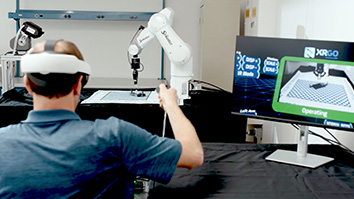
SRI robotics innovations featured in Silicon Valley mini-doc
Angel investor and media producer Will Phillips explores two groundbreaking SRI-born projects in his mini-documentary on the Bay Area startup scene.
-

Chris Cowart: Activating Japan’s intrapreneurial superheroes
At the Nomura-SRI Innovation Center, Cowart leads a team that equips corporate innovators to create technology-driven change.
-
QED-C executive director named to the Quantum 100
Celia Merzbacher, executive director of the SRI-managed Quantum Economic Development Consortium, has been recognized for her role in strengthening the global quantum ecosystem.
-

New engines of technology-driven growth
Leveraging proven lab-to-market expertise, SRI is helping collaborators from Japan to New Jersey strengthen their science and technology ecosystems.
-

Vaalia Health: Causal AI for precision healthcare
With healthcare shifting toward at-home solutions, Vaalia Health is building on SRI’s AI innovations to make sure that efficient care is also effective care.
-

Ashish Gehani named 2025 SRI Fellow
Senior principal computer scientist recognized for contributions in cybersecurity and trustworthy systems.
-

Major NIH study helps families manage sleep and screentime
SRI Fellow Fiona Baker: Longitudinal research like the SRI-supported ABCD study is crucial for understanding how modern life shapes developing brains.
-

SRI and Global Innovation Labs deliver deep tech solutions to regional markets
The strategic partnership represents the next-gen approach to bridging science with rapid go-to-market strategies.
-
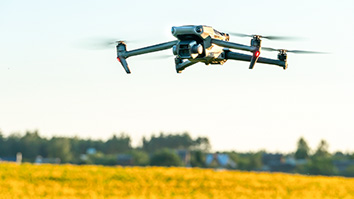
Achieving the potential of autonomous drones
Leveraging SRI navigation technology, Entropy Robotics aims to create safe, resilient autonomous platforms for defense, livestock management, disaster recovery, and much more.
-

Can AI help us find valuable minerals?
SRI’s machine learning-based geospatial analytics platform, already adopted by the USGS, is poised to make waves in the mining industry.