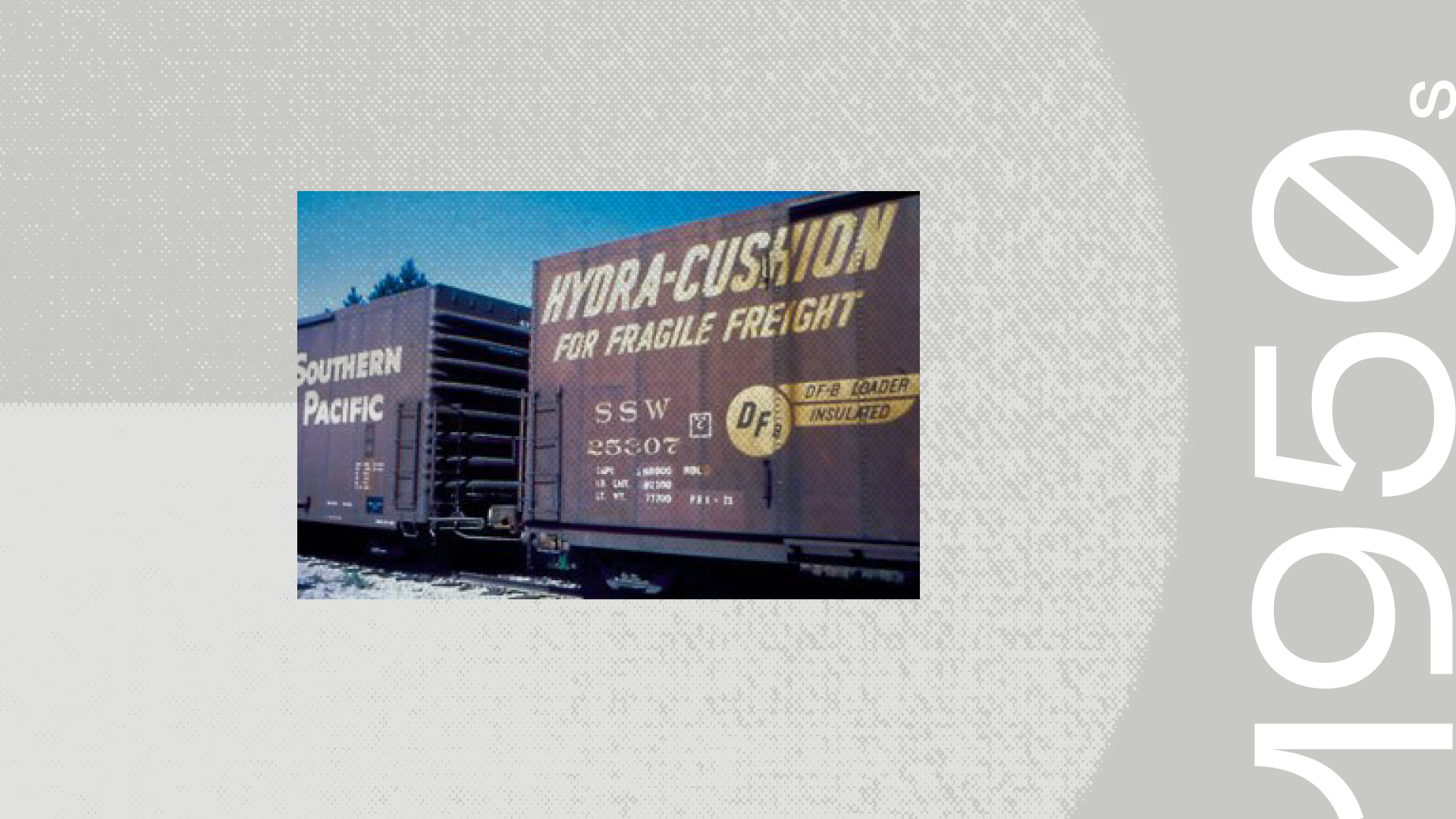
In the 1950s, damage to rail freight shipments totaled more than $100 million per year in the U.S. alone. In 1954, Southern Pacific asked SRI to develop shock-absorbing coupler technology that could provide a protective “cushion” for loaded boxcars on cross-country transport.
SRI designed a new type of underframe to hydraulically absorb and dissipate shocks from coupling, starting, and stopping. The new system, dubbed the Hydra-Cushion, was low-cost, simple in construction, reliable in operation, and maintenance-free.
Southern Pacific outfitted thousands of boxcars with the Hydra-Cushion technology, which greatly reduced cargo damage, extended railcar service life, and reduced maintenance costs. Southern Pacific noted that the average dollar value of the damage loss on railway cars equipped with Hydra-Cushion was reduced by more than a factor of 25 over those without it.