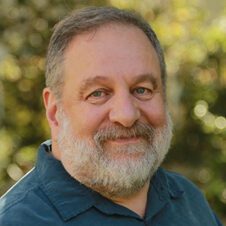
Principal Scientist, Artificial Intelligence Center
Aaron Heller has more than 30 years of experience in image and video understanding including photogrammetry, registration, computational photography, segmentation, 3D feature extraction, object recognition, projective invariants and mover detection.
He has worked extensively with satellite, airborne and ground-level sensed data including visible, IR, multispectral, hyperspectral, LIDAR and SAR data. He was responsible for the segmentation, registration and error-modeling components in numerous DARPA projects such as Locktight, Nova, E3D and PerceptOR.
Heller is a co-author of the RADIUS Common Development Environment, which was the first software system to make mathematically rigorous photogrammetry tools available to the computer vision research community. He has used formal methods tools such as automated theorem provers to understand various properties and behaviors of image and signal processing systems.
He served on the three DARPA ISAT study panels: ‘Data Taming,’ ‘Persistent Surveillance,’ and ‘Sense of a Firefight,’ and he was a founding member of NGA’s Motion Imagery Tradecraft Working Group. Heller also has published numerous papers on high-resolution 3D audio capture and reproduction and is the author of the open-source Ambisonic Decoder Toolbox, which is used to design immersive 3D sound-diffusion systems.


