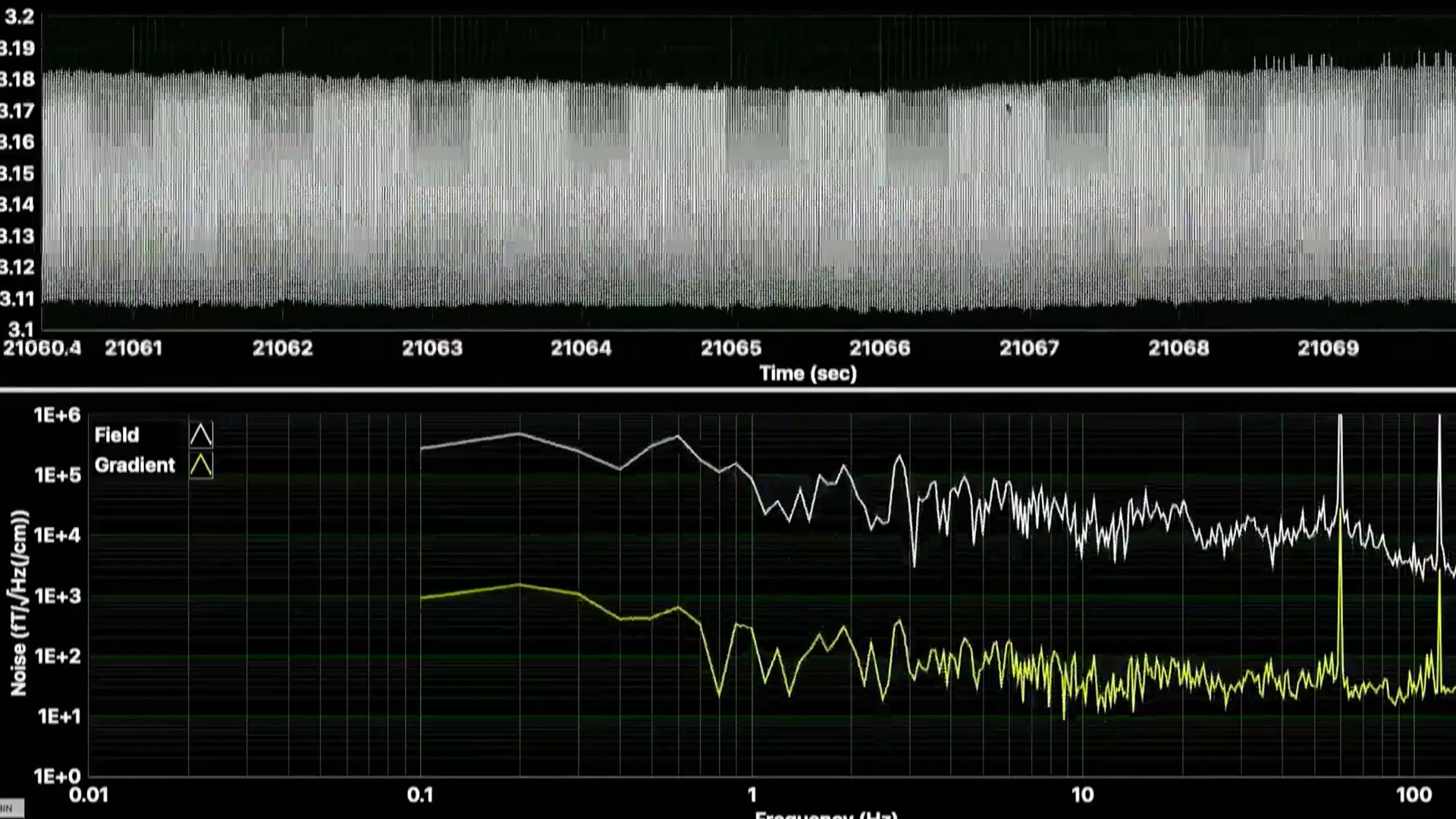
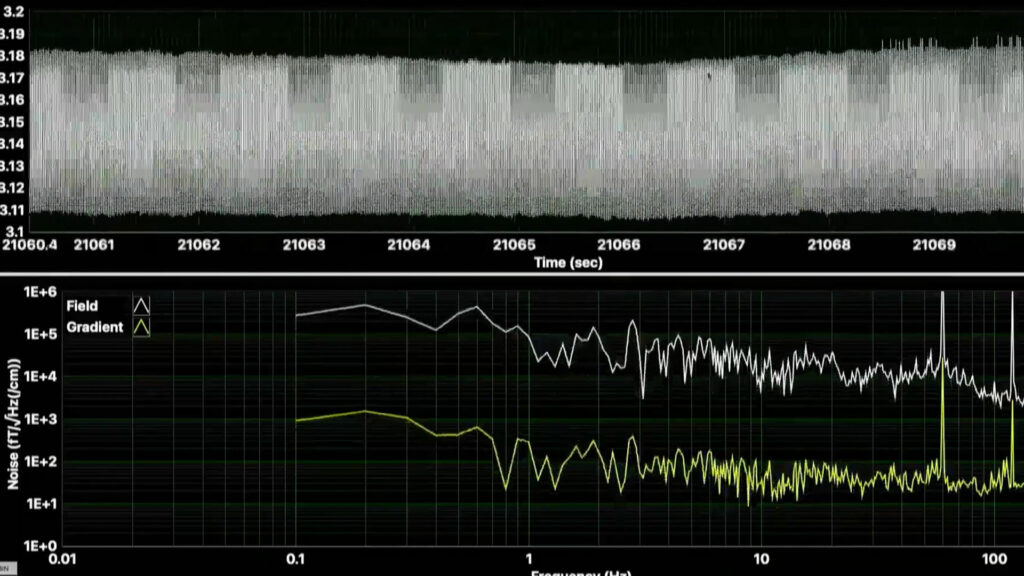
The Atomic Magnetometer for Biological Imaging in Earth’s Native Terrain (AMBIIENT) analyzes signals that can diagnose some medical conditions.
Within biomedical research, biomagnetism refers both to the magnetic fields created by living organisms and the scientific study of these signals. With the recent development of commercially viable technology, including magnetometers and gradiometers, researchers are now using biomagnetism to assess organs and tissues to aid in diagnosing medical conditions, like heart arrhythmias.
A recent advancement in this field has come out of a collaboration led by SRI International–the Atomic Magnetometer for Biological Imaging in Earth’s Native Terrain (AMBIIENT). The technology, created with Twinleaf LLC and Princeton University, can perform live magnetocardiography, or the measurement of heart signals. Demonstrated live at Defense Advanced Research Projects Agency (DARPA) FORWARD, faint magnetic signals outside of an expensive shielded room were observed.
See the full demonstration below.