SRI researchers Arif Rachmatullah, Nonye Alozie, Hui Yang, and Marta Mielicki share evidence-backed assessment strategies to support young students’ science development.
Life science concepts – like how plants and animals survive, how parents help their young, and how offspring resemble their families – are important for developing early scientific literacy. For this reason, the Next Generation Science Standards (NGSS) emphasize these concepts in the early elementary grades. The NGSS ask young learners to do more than just name animal parts or describe behaviors. They also have to explain patterns, make evidence-based claims, and reason about how living creatures meet their needs. Yet first graders are still developing language and literacy skills, and traditional assessment tasks that rely heavily on reading or writing may not capture the richness of children’s scientific thinking.
Understanding how young learners make sense of life science ideas – and how teachers can design tasks that reveal that understanding – poses a unique challenge. To address this challenge, SRI researchers developed nine NGSS-aligned formative assessment tasks and partnered with two experienced teachers to try them out in first-grade classrooms. The study showed that well-designed, developmentally appropriate assessments can make young learners’ emerging scientific thinking more visible. Five design features in particular helped first graders show what they know and can do, in ways that feel natural, engaging, and accessible.
Use multimodal representations to deliver content
Our study demonstrated that young learners are more engaged and demonstrate stronger reasoning when tasks deliver content using different modalities.
For example, for the Wing and Things assessment task, first graders were shown a picture of a turtle and asked to draw or describe a human-made object that works like a turtle shell (biomimicry). Only a quarter (25%) of the students succeeded in doing so. Even though turtles are familiar, the task required students to independently invent a biomimicry example from scratch and communicate their reasoning based on a static picture, a step that remained challenging for many first graders despite intentional scaffolding in earlier questions.
However, in the My Strong House task, first graders watched a video about the role of roots for plant stability and then were asked to design a house with pillars, foundations, or basements extending into the soil. Nearly all students (92%) completed this task successfully. Notably, students had opportunities to talk through the idea together in small groups before designing, which appeared to make the familiar contexts even more accessible and concrete. Additionally, the use of video helped students envision the structural importance of roots to plant stability, which supported their ability to transfer root function to house design.
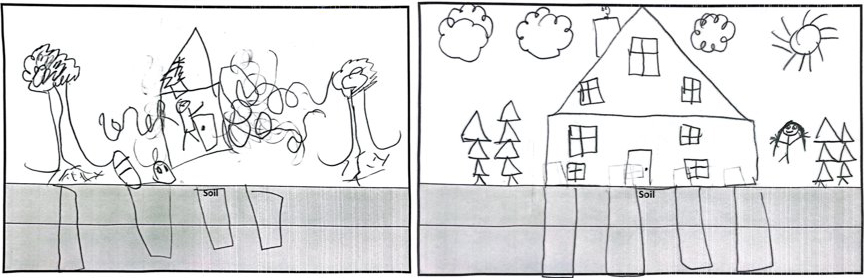
Teacher takeaway: Designing a house based on root structures may have been more accessible to students when implemented with instructional video content and opportunities for discussion, as opposed to designing an object inspired by a static image of a turtle shell. This finding shows the importance of thoughtful delivery of multimodal content in designing developmentally appropriate assessments.
Allow multimodal expression to reduce the burden of writing
Our study also showed that young learners can reason concretely and expressively through multiple response modes. A major finding was that students were often able to express their understanding through drawing, oral expression, or gesturing.
For example, the Baby Survival task asked first graders how buffalo parents protect their young. Instead of writing, they accurately drew and orally described (to the teacher or their elbow partner) how buffalo parents respond to danger by circling their offspring to protect them. This method allowed students who struggle with writing to demonstrate their understanding.
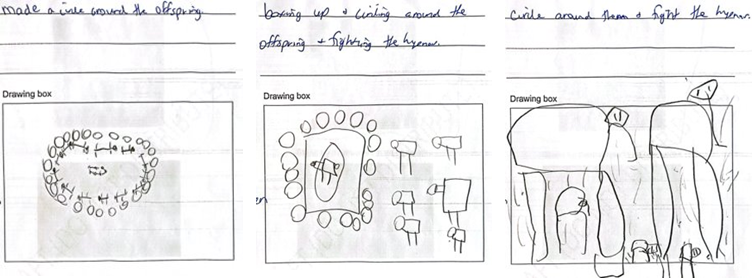
Teacher takeaway: Across tasks, multimodal response opportunities gave students more ways to express causal relationships, describe patterns, and explain structure–function ideas. This approach helped those who struggle with writing provide richer evidence of their scientific understanding.
Build in small-group oral reasoning before independent written work
Similarly to the first design feature, our study revealed that before responding to a task, first graders may benefit from opportunities to verbalize their thinking, hear classmates’ interpretations, and refine explanations collaboratively.
Two tasks illustrate this point. In My Strong House, first graders were asked to collaboratively identify the functions of different types of plant roots after viewing a video. In Wings and Things, on the other hand, students were asked to individually identify the functions of different bird parts after viewing an image. All students who completed My Strong House were able to recognize the functions of roots, while most students (82%) who individually completed Wings and Things were able to identify the functions of bird parts. Although many students successfully responded to Wings and Things individually, we found that when students worked in small groups for My Strong House, there was a higher success rate. They had more opportunities to share, listen, compare, and adjust their thinking.
Teacher takeaway: When students were given opportunities to discuss their responses in small groups, their reasoning improved noticeably. These discussions helped students verbalize and practice scientific vocabulary, which enhanced their subsequent reasoning.
Include high-quality, age-appropriate visuals for comparison tasks
When young learners are asked to compare or describe features of plants and animals, the clarity of the visuals matters. Our study found that the quality of the images in certain tasks may have influenced students’ ability to identify similarities and differences.
For example, in the Dog and Marigold task, students were asked to identify similarities and differences between parent and offspring organisms. We found that fewer than half of first graders (40%) were able to identify similarities between a mature marigold plant and its offspring. This was likely because the young plant in the provided image was not depicted clearly (see below). However, in the Peas task, students were asked to identify similarities between a mature Pea plant and its offspring using images that were clearer and better suited for comparison (see below). As a result, almost all students were able to correctly identify the similarities as well as differences.
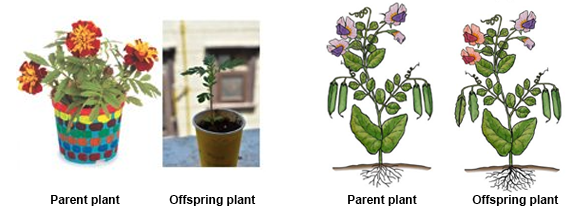
Teacher takeaway: Clear, comparable images are essential to accurately capturing students’ scientific reasoning. Careful curation or design of visuals substantially scaffolds students’ thinking and helps improve the interpretability of students’ responses.
Incorporate representations to show processes and patterns
Some life science ideas—like movement, growth, and survival behaviors—are easier to grasp when students can actually see them happening. Representations such as images and videos can make invisible processes and patterns visible and reduce the abstraction of scientific explanations.
Across two tasks that asked students to identify survival patterns, we found that most first graders were able to accurately gather information from both video and images (with or without accompanying textual information) to describe how animal parents respond to their offspring’s needs (such as through protection and feeding). This was true for both small-group and independent tasks. For example, in the individual task Help the Baby, almost all students (93%) successfully identified parental responses after watching a short video clip. In the My Strong House task mentioned above, all students were able to identify the functions of different types of roots after watching a video followed by small-group discussion.
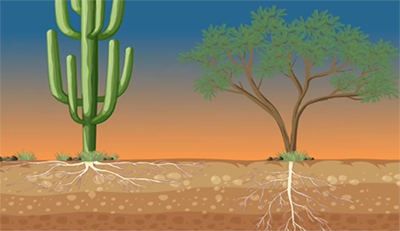
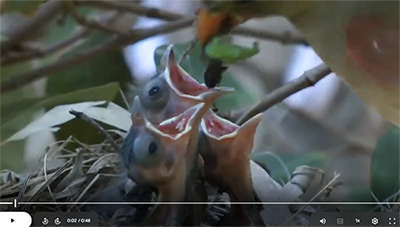
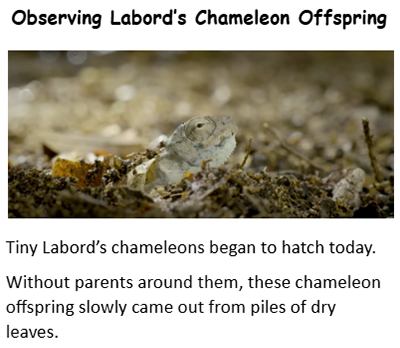
Teacher takeaway: Representations help young learners observe change over time and make causal relationships more perceptible. Dynamic representations such as videos also support reasoning about otherwise abstract phenomena that static images alone may not convey.
Small design choices lead to big thinking
From a learning progressions perspective, it’s important to remember that young children’s scientific understanding develops along a continuum rather than being simply right or wrong. The five features described above are small design choices that can dramatically expand the visibility of students’ reasoning. These strategies not only align with developmental science, but also make NGSS life science concepts and practices more accessible and meaningful for first graders.
To learn more about SRI’s study and methods, view the SALDEE video and infographic.