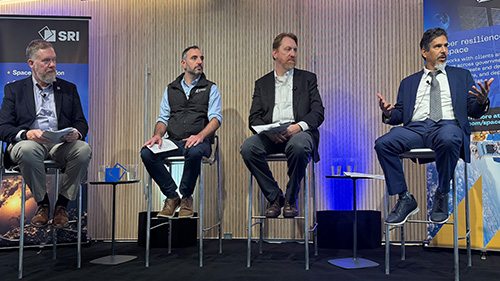
The director of SRI’s Hardware Research & Technology Lab: “Our goal is to have impact on the world around us.”
Research that never makes it into the world doesn’t serve a lot of purpose. Our goal in the end is that we want to have impact in the world around us. The way you have impact is to build something that a company is going to make and manufacture and distribute to an end user.
It’s important that we think about that even at the earliest stages of our projects. Within our division, we are very well embedded with a refinery team — people with business development training. They work with our researchers early-on in our projects to think about the end goal — how does it address a market need and is there a customer desire for this item?
We also involve companies at early stages who would be transition partners for our technologies. So even for our government work, we often bring in a commercial partner who can validate that this is something that would make a difference and could be a commercial business line for them.
It helps us make sure we’re sending the research in a direction that is useful. And they can be set up early to be that commercialization partner that will take it to market in the end.