Press
-
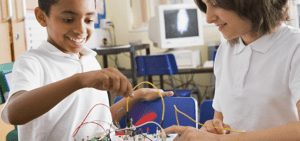
Report Tackles Assessment Design for Next Generation Science Standards
If the new science standards could be summed up in one grand sentence, it would likely be – “It is not what you know, but how you use and apply what you know that makes a real difference for science learning.” The Next Generation Science Standards (NGSS) emphasize that all students should learn science by…
-

Automatic Speaker Recognition for Authenticating Users in the Internet of Things
Our world is becoming increasingly mobile. People rely on their mobile devices not only for communication, but for applications from commerce, to home automation and security, to banking, to entertainment, just to name a few. Coupled with today’s expanding environment of web-connected “smart” devices—known as the Internet of Things (IoT)—it’s more critical than ever for…
-
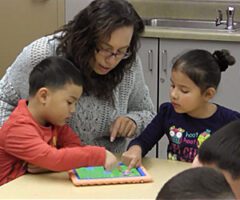
Evaluating and Understanding STEM Teaching and Learning in Early Childhood
SRI Education, a division of SRI International, has been at the forefront of much of this research on early STEM. SRI’s work in early STEM can be broadly categorized into three areas that compliment and inform each other: research and development efforts, evaluations, and assessment initiatives.
-

Technology for Learning Mathematics: What Can We Learn from Large-Scale Studies?
At SRI, our vision for changing the world in mathematics education has been to “democratize access to advanced mathematics” through high quality implementations of powerful learning technologies.
-
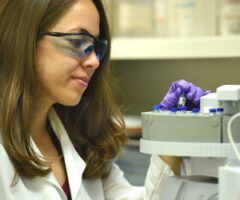
Combining Expertise to Battle Zika
From its inception, SRI International was structured to encourage collaboration between scientists across disciplines. This approach has generated many groundbreaking discoveries and technologies over the years. Recently, SRI created and launched an internal competition for innovative, forward-thinking projects that leverage this successful, collaborative model while also furthering SRI’s mission to create world-changing solutions making people…
-
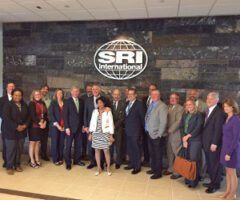
Collaboration is Key to Tackling Emerging Infectious Diseases
As the news headlines tell us daily, emerging and re-emerging infectious diseases are a growing threat. Viruses such as Zika, Middle Eastern Respiratory Syndrome (MERS) and yellow fever are causing illness and significant concern around the globe. There are many causes for the emergence and spread of these diseases: commercial air travel (which provides fast…
-
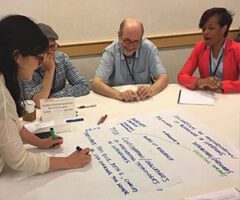
Cyberlearning ‘16 Tackles Designs for Deeper, Broader, and More Equitable Learning
The 5th annual Cyberlearning meeting, recently held in Arlington, VA, engaged more than 180 NSF-funded researchers, educators and other attendees,
-

Young Universities as Engines of Innovation
Universities the world over face pressure to contribute to the innovation-based economic development of the regions and nations that host them. This pressure is particularly acute for new universities – those established within the last few decades. Virtually all of these young schools were founded with the express purpose of accelerating local innovation. At the…
-
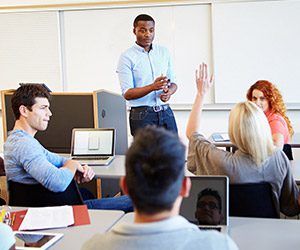
Can Adaptive Courseware Technology Positively Impact Student Learning Outcomes?
In higher education, if students fail to successfully complete the courses offered in the first few terms of school, they can jeopardize their dreams of a college degree. In two-year colleges, the courses representing the greatest hurdles are often developmental courses in English or math. In four-year colleges, they often are introductory courses in subjects…
-

New Report Highlights Key Findings from Next Generation STEM Schools Forum
In the 2015 State of the Union address, President Obama called for Next Generation High Schools. Next Generation STEM schools seek to intensify Science, Technology, Engineering and Math (STEM) opportunities, especially for historically underrepresented students. Such schools aim to strengthen STEM learning for all students who have a strong interest in STEM, regardless of their…
-
Playing the Long Game: Utah Renews Investment in its Innovation Ecosystem
Innovation—the process of creating new products and services and delivering them to customers—is tough. It’s tough, because the innovation process is nonlinear, requires adaptation, requires multiple skillsets, and engaging multiple stakeholders. Regions with strong innovation systems are well known, but where do states trying to build innovation systems start? Utah offers some good lessons. In…
-
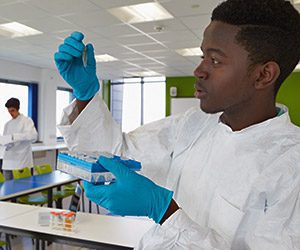
Characteristics of Successful Inclusive STEM High Schools and their Impact on Student Outcomes
There has been a growing interest across the U.S. in expanding science, technology, engineering and math (STEM) opportunities for our nation’s youth through STEM-focused high schools – particularly for those groups who are under-represented in these high-growth fields (including minorities, females, and students from low-income families). Inclusive STEM high schools are designed to increase participation…