

The internet as we know it today began to take shape in the late 1960s in the form of a project called the ARPANET.
Funded and championed by the Department of Defense’s Advanced Research Projects Agency (then called ARPA, now DARPA), ARPANET aimed to connect computers at different locations across the United States and conduct research in wide-area networking.
The very first transmission on the ARPANET occurred at 10:30 p.m. on October 29, 1969, when UCLA attempted to send a message to SRI. The initial message crashed the system (an inauspicious beginning for a technology that would soon change the world). However, within an hour of that initial attempt, the UCLA and SRI engineers were successfully transmitting messages from Los Angeles to SRI’s computer in Menlo Park.
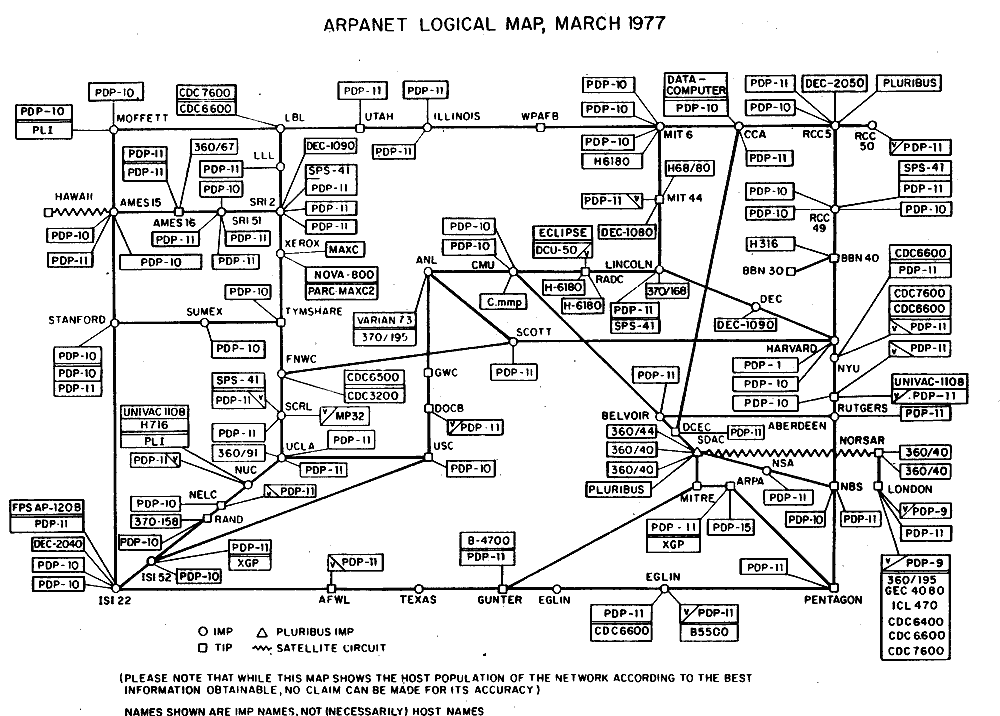
The University of California, Santa Barbara and the University of Utah joined ARPANET later that year to create a four-node network. By 1972, the ARPANET had expanded to 37 computers.
As computer networking matured, subsequent SRI contributions like internetworking and the Network Information Center played an essential role in delivering today’s globe-spanning internet.
In 2009, the IEEE commemorated the dawn of ARPANET by presenting SRI with an IEEE Milestone plaque — one of the nine given to SRI to date.
Learn how SRI continues to chart the future in fields like AI, security, and quantum.