SRI International
-
Trace Amine-Associated Receptor 1 Agonists as Narcolepsy Therapeutics
As partial agonists at trace amine-associated receptor 1 (TAAR1) promote wakefulness in mice and rats, we evaluated whether TAAR1 agonism had beneficial effects in two mouse models of narcolepsy.
-
Challenges in the Development of Therapeutics for Narcolepsy
Development of therapeutics for narcolepsy has been challenged by historical misunderstanding of the disease, its many disparate symptoms and, until recently, its unknown etiology.
-
Hybrid Convolutional Neural Networks for Articulatory and Acoustic Information Based Speech Recognition
This work explores using deep neural networks (DNNs) and convolutional neural networks (CNNs) for mapping speech data into its corresponding articulatory space. Our speech-inversion results indicate that the CNN models perform better than their DNN counterparts.
-

Manufacturing Next-generation Robotic Manipulation
Every April, National Robotics Week fuels a heightened awareness around robotics, its impact on society, and its growing importance in a wide variety of fields and applications. Robotics, however, never seems to achieve its hyped potential from its beginnings in industrial applications, when the benefits of fast, precise, repetitive manipulation in manufacturing were a significant driver for…
-
High-Resolution Health Monitoring of Track and Rail Systems with Fiber Optic Sensors and High-Frequency Multiplexed Readouts
In this study, we explore the use of Fiber Bragg Gratings (FBGs) and a high resolution, low-cost optical readout developed at PARC to interrogate the acoustic emissions generated by a train-rail system.
-
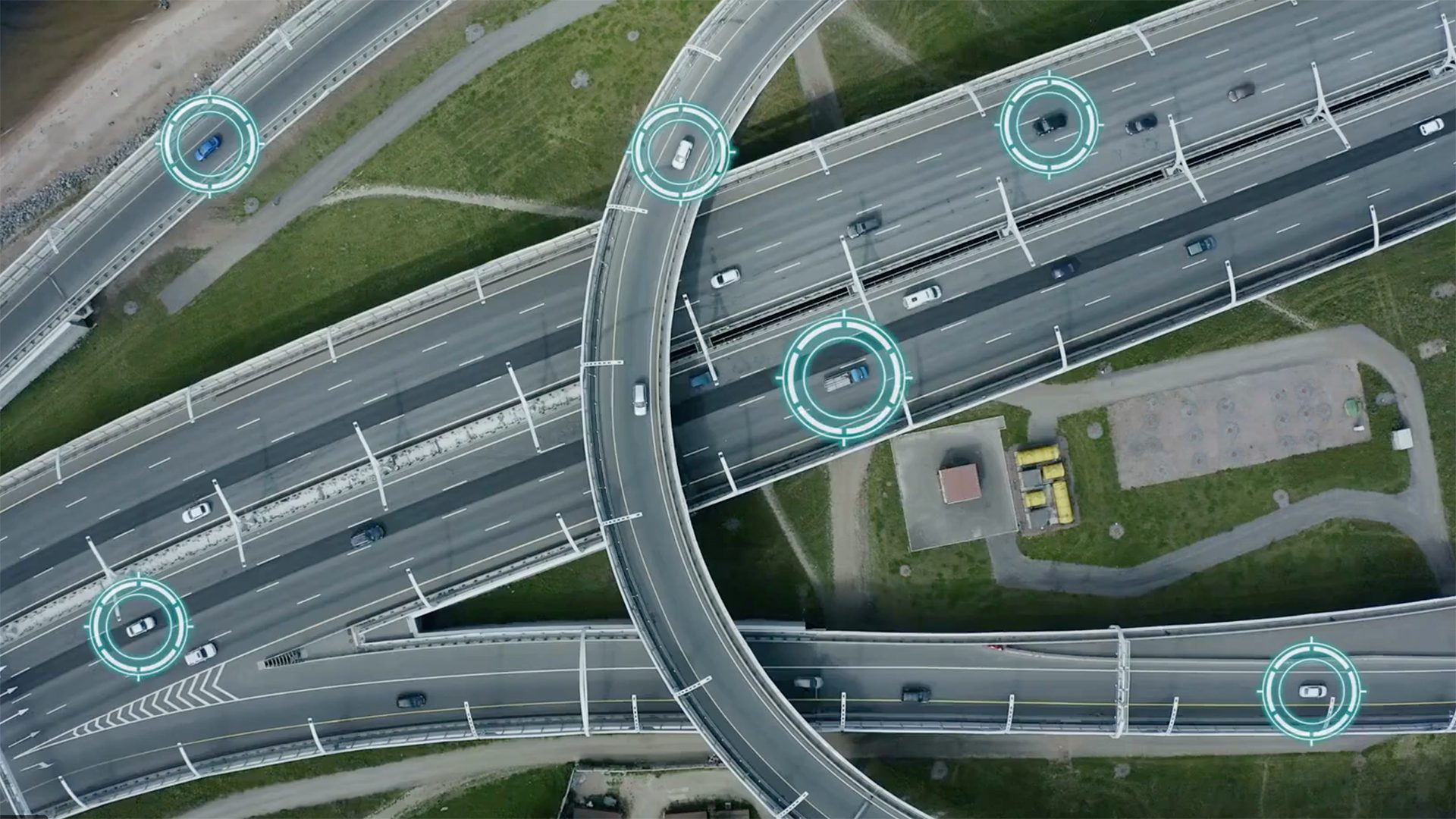
CamSLAM: Advanced Real-Time Mapping and Localization
CamSLAM™ provides fast, accurate real-time mapping for a range of robotic and related mobility applications including augmented and virtual reality, person tracking, robot/ drone control, vehicle navigation, and tele-manipulation.
-
Review of Research on Clinical Practice in Teacher Preparation: What Do We Know and How Can We Advance Knowledge?
We share what research points to in terms of high-quality clinical preparation and recommend a more productive path for future teacher preparation research.
-
Developing protocols to support collaborative teacher reflection and professional learning for science argument writing
This white paper describes the development of a suite of teacher reflection protocols that structure generative conversations among teachers about instruction in support of students’ written scientific arguments.
-
Examining Teacher Preparation Program Feedback from CSU Systemwide Survey Data: Using the CTQ Completer Survey to Support Data-Driven Continuous Improvement
This report provides background on the Center for Teaching Quality (CTQ) Completer Survey, describing how California State University (CSU) grantees of the New Generation of Educators (NGEI) initiative can use data from the Survey strategically to support certain data-driven program reform efforts.
-
Semantic Instrumentation of Virtual Environments for Training
We discuss an approach in which the virtual environment is semantically instrumented in order to allow for the tracking of and reasoning about open-ended learner activity therein.
-
GPU Performance Prediction using Representation Learning
We propose a representation learning approach to address the high level of contention among thousands of parallel threads in GPU activity prediction models.
-
Connected Freight Rail Stock: A Modular Approach Integrating Sensors, Actors and Cyber Physical Systems for Operational Advantages and Condition Based Maintenance
This paper describes the basis of such a system including the power supply, intra-train communications, sensing and cloud-based analytics.