SRI International
-
Findings for Itasca County: Evaluation of Minnesota’s Race to the Top-Early Learning Challenge Access Strategies: Scholarships and Title I PreK Incentives summary for Years 1–3
This report provides a brief summary of evaluation findings about the implementation and impacts of the Race to the Top – Early Learning Challenge (RTT-ELC) Scholarships and Title I PreK Incentives in Itasca County Transformation Zone across the three years of the evaluation (2012–2015). It also summarizes the long-term successes and lessons learned from implementing…
-
Findings for the Saint Paul Promise Neighborhood: Evaluation of Minnesota’s Race to the Top-Early Learning Challenge Access Strategies: Scholarships and Title I PreK Incentives Summary for Years 1–3
This report provides a brief summary of evaluation findings about the implementation and impacts of the Race to the Top-Early Learning Challenge (RTT-ELC) Scholarships and Title I PreK Incentives in the Saint Paul Promise Neighborhood Transformation Zone .
-
Evaluation for Minnesota’s Race to the Top-Early Learning Challenge Funds to Promote Access to High-Quality Programs: Year 3 Final Scholarship Implementation Annual Report
This is the final annual report on the evaluation of Minnesota’s Race to the Top – Early Learning Challenge (RTT-ELC) focusing on the Race to the Top – Early Learning Scholarships.
-
Findings for White Earth Nation: Evaluation of Minnesota’s Race to the Top-Early Learning Challenge Access Strategies: Scholarships and Title I PreK Incentives Summary for Years 1–3
This report provides a brief summary of evaluation findings about the implementation and impacts of the Race to the Top-Early Learning Challenge Scholarships and Title I PreK Incentives in the White Earth Transformation Zone.
-
Influences on the Scaling of Digital Learning Resources
SRI’s analysis of data from more than 20 digital learning products suggest that for technologies designed for use within schools, achieving effectiveness and achieving scale can be hard to do at the same time.
-

Meeting Strategic Army Client Requirements at Aberdeen Proving Ground
SRI engages strategic partners within the U.S. Army and the small business community to offer a new operational approach to moving information systems into sustainment. Our cost-effective, iterative, and seamless approach involves subject matter experts from across SRI’s multidisciplinary technology R&D focus areas. To expand our capabilities for Aberdeen Proving Ground (APG) clients, SRI’s Information…
-

Saving Energy, Building Skills: The Industrial Assessment Center Program
The Industrial Assessment Center (IAC) program from the Department of Energy provides energy efficiency assessments to small and medium‐sized manufacturers across the U.S. These assessments are in-depth evaluations of an industrial facility’s major energy-consuming systems, led by engineering faculty from 24 participating universities with the extensive involvement of graduate and undergraduate students. Since 1981 more…
-

Turning Autism Research into Support for Learning
34 percent of people who have autism and attend college end up being Science, Technology, Engineering or Math (STEM) majors, which is significantly higher than any other disability group and much higher than the general population, which is closer to about 20 percent.
-

Developing an Early Mathematics Assessment to Evaluate School Readiness for Young Learners
Preschool mathematics curriculum programs have been shown to have a positive impact on young children’s early mathematics learning.
-
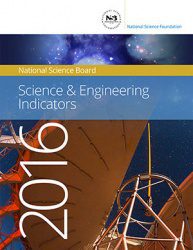
Science and Engineering Indicators Give Policy Makers Better Information for Data-Based Decisions
The National Science Board recently released Science and Engineering Indicators (SEI) 2016, the premier source of quantitative information on the state of U.S. and international science, engineering, technology, and education. The report provides high-quality, objective data on a range of S&E indicators that help inform data-driven policy making. SRI managed the compilation of data for over 100 indicators…
-
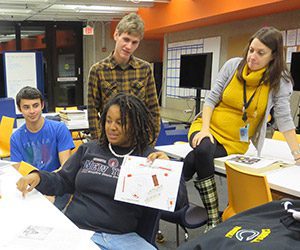
Assessing the Value of Social Capital for Youth Across Multiple Learning Environments
Over the last several years, an area of focus in the education field has been to create pathways for youth to connect their learning experiences with their interests and future career opportunities–the idea being that students will be more engaged and invested in their education if it is relevant to them. Many of these pathways…
-
Factors Affecting Mental Health Service Utilization among California Public College and University Students: Who Accesses Resources and Who Doesn’t?
Despite having access to campus mental health providers and insurance to cover services, many college students do not receive necessary services. This study examined factors influencing college students’ use of mental health services.