SRI International
-

Saving Energy, Building Skills: The Industrial Assessment Center Program
The Industrial Assessment Center (IAC) program from the Department of Energy provides energy efficiency assessments to small and medium‐sized manufacturers across the U.S. These assessments are in-depth evaluations of an industrial facility’s major energy-consuming systems, led by engineering faculty from 24 participating universities with the extensive involvement of graduate and undergraduate students. Since 1981 more…
-

Turning Autism Research into Support for Learning
34 percent of people who have autism and attend college end up being Science, Technology, Engineering or Math (STEM) majors, which is significantly higher than any other disability group and much higher than the general population, which is closer to about 20 percent.
-

Developing an Early Mathematics Assessment to Evaluate School Readiness for Young Learners
Preschool mathematics curriculum programs have been shown to have a positive impact on young children’s early mathematics learning.
-
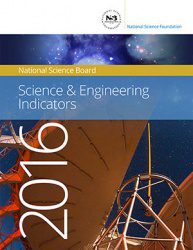
Science and Engineering Indicators Give Policy Makers Better Information for Data-Based Decisions
The National Science Board recently released Science and Engineering Indicators (SEI) 2016, the premier source of quantitative information on the state of U.S. and international science, engineering, technology, and education. The report provides high-quality, objective data on a range of S&E indicators that help inform data-driven policy making. SRI managed the compilation of data for over 100 indicators…
-
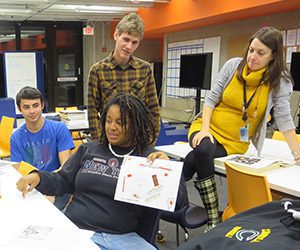
Assessing the Value of Social Capital for Youth Across Multiple Learning Environments
Over the last several years, an area of focus in the education field has been to create pathways for youth to connect their learning experiences with their interests and future career opportunities–the idea being that students will be more engaged and invested in their education if it is relevant to them. Many of these pathways…
-
Sampling Exactly from the Normal Distribution
An algorithm for sampling exactly from the normal distribution is given. The algorithm reads some number of uniformly distributed random digits in a given base and generates an initial portion of the representation of a normal deviate in the same base.
-
Lessons Learned From Early Implementations of Adaptive Courseware
To address the urgent need to improve student outcomes in developmental and general education courses, higher education institutions are turning to new learning technologies.
-
Factors Affecting Mental Health Service Utilization among California Public College and University Students: Who Accesses Resources and Who Doesn’t?
Despite having access to campus mental health providers and insurance to cover services, many college students do not receive necessary services. This study examined factors influencing college students’ use of mental health services.
-

Measuring Student Learning about Computing
President Obama’s recent initiative, Computer Science for All (CS4All), emphasizes the need to teach computer science (CS) as part of the regular K-12 curriculum. An important part of teaching is measuring learning. For example, teachers need to measure learning so that they can better help students learn. Likewise, students and parents want schools to document what students…
-
Summary of research on the association between state interventions in chronically low-performing schools and student achievement
This report presents a summary of research on the associations between state interventions in chronically low-performing schools and student achievement.
-

Identity: The Critical Security Factor
There are many factors that impact the effectiveness of security programs, ranging from camera selection and placement, to the password strength policy and even the reliability of power systems. But, perhaps the single most critical factor for security is one that cuts across many aspects of its implementation: the concept of identity. Many aspects of…
-

Balancing Widespread Use and Positive Learning Impacts of Educational Technology
Today, technology developers can get their innovations into the hands of many users quickly, giving them the opportunity to gather user feedback they can use for product improvement. Educational technology product design is no exception, as illustrated by the Khan Academy, which grew from a few YouTube videos to a million users in less than…