News and stories
-

SRI and Maka collaborate to help families find thoughtfully curated videos for young children
SRI’s AI-powered APPROVE supports Maka’s expert-led curation of video content for young children.
-

Oprah Daily turns to SRI’s Fiona Baker to explain the sleep science behind menopause
Closing the gap in women’s health research starts with questions like these.
-

Bridging the gap: What SRI’s classroom research reveals about teaching kids to read
A study finds explicit phonics instruction is in place and ready for the next step in improvement.
-

What can your wearable really tell you about menopause?
The New York Times turns to SRI’s Fiona Baker for a scientist’s take.
-

Can AI help us identify scientific breakthroughs?
SRI’s PARC Forum discussed AIs impact on the scientific community and how its shaping future discoveries.
-

SRI completes Global Startup Campus team: Directors appointed
Cabinet Office and Japan Science and Technology Agency approve David Schwartz and Kenji Yoshihira to lead research themes under Japan’s Global Startup Campus Initiative.
-
SRI appoints Robert Mandelbaum as Senior Vice President of Strategic Initiatives
Former Lockheed Martin ATL Managing Director and DARPA Program Manager to lead institute-wide high-growth programs.
-

SRI-spinout Wingsure helps coffee farms build consistent intelligence
The new smartphone platform gives growers a single, verified record across various programs.
-

Can 0.2% of your brain control how you sleep?
A rare class of neurons upends a century of thinking about how the brain produces sleep.
-

SRI study finds structured linguistic phonics boosts reading for older learners
A new study from SRI Education offers rigorous evidence on phonics instruction for grades 4–8.
-

SRI wins autonomous Space Domain Awareness role in U.S.–Korea collaboration
SRI was awarded a subcontract to STEP Lab Ltd. to develop an optical payload for space domain awareness.
-
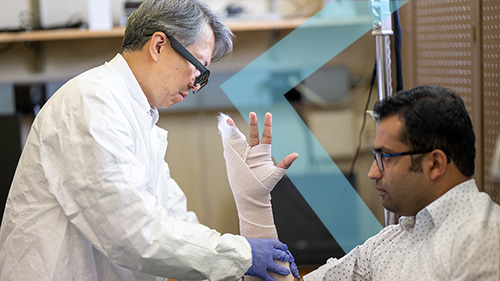
Reuters covers SRI’s work in the ARPA-H-funded PARADIGM program
The program aims to bring care to rural areas as hospitals close.