Citation
Reynolds, D., Dec, S., Cassidy, L., Rutherford-Quach, S., Jennerjohn, A., & Woodworth, K. (2026). From Materials to Meaning: Translating Knowledge-Rich Curriculum to Knowledge-Rich Instruction. [Learning brief]. SRI.
Abstract
Research and theory have established the potential power of using knowledge-rich curricula that integrate social studies, science, and literary content with literacy instruction to improve students’ reading comprehension (Cabell et al., 2025; Kim & Cao, 2025). In practice, districts around the country have shifted towards knowledge-rich curricula, and many districts have invested heavily in implementation. This study is part of an ongoing effort to understand how those implementation supports translate to instruction.
We partnered with four districts to investigate the depth of their comprehension instruction. Each district’s curriculum offered regular opportunities for students to do robust work and include a mix of surface-level and robust goals and discussion questions. However, across 231 comprehension lesson observations in grades K–5, we found that 60% of lesson objectives aimed for surface-level or no comprehension purposes and 77% of lessons resulted in students doing surface-level or no comprehension work. We identified two factors that may contribute to this problem: a pedagogy challenge and a knowledge challenge.
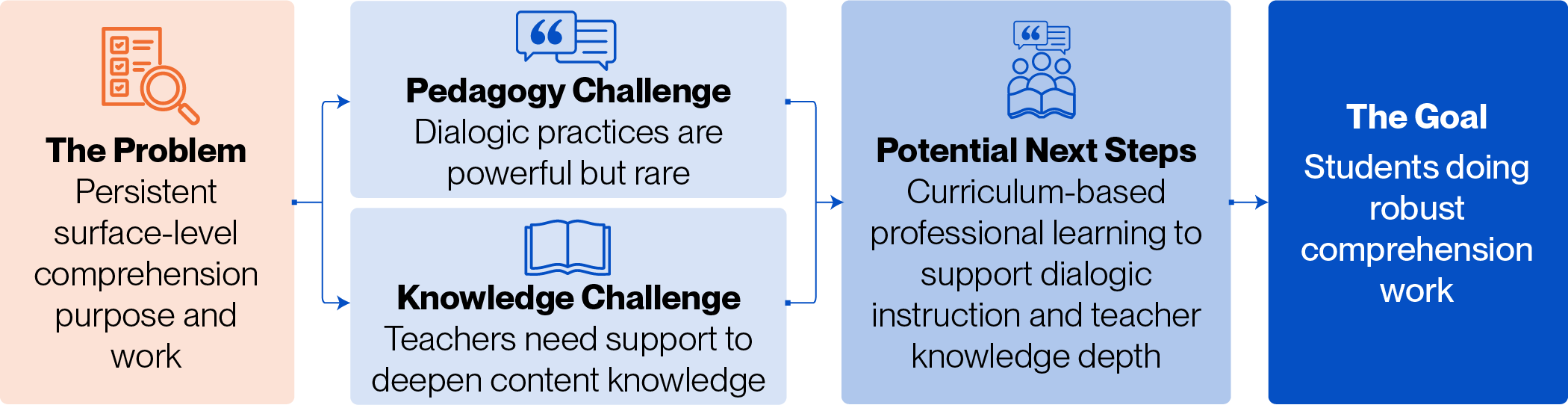
The pedagogy challenge connects specific instructional practices with students’ robust comprehension work. We identified three such dialogic practices: students doing the bulk of the intellectual work, regular use of text evidence with explanation, and teachers using student contributions to advance comprehension. These practices were relatively rare in observed instruction. Supporting teachers to deliver dialogic instruction may help them build on surface-level tasks and sustain robust comprehension work.
The knowledge challenge names a tension that teachers experience daily: Knowledge-rich curricula contain topics not common in everyday adult life. Only about a third of teachers felt fully confident in teaching the historical, scientific, and literary content embedded in their comprehension curriculum. Over half of teachers reported simplifying their curricula’s content, texts, and tasks at least weekly. Interviews also suggested that standards and assessments may encourage teachers to focus on surface-level goals. Finally, districts’ professional learning systems did not fully support teachers in building deep content knowledge. We share recommendations for engineering systems around curriculum-based professional learning that would sharpen teachers’ skills in delivering robust, dialogic lessons while also deepening their content knowledge.