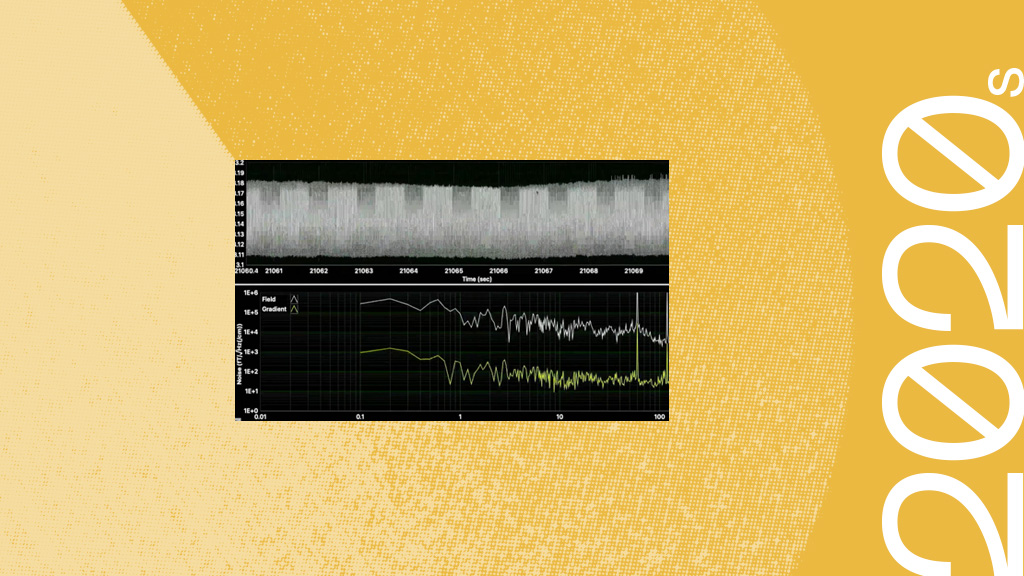
Research and diagnostic techniques like magnetoencephalography (MEG) and magnetocardiography (MCG) measure hard-to-detect biological processes using magnetic fields. Clinical trials of MCG systems, for example, are currently exploring how this precise, noninvasive method of measuring cardiac activity may improve our ability to diagnose concealed cardiac abnormalities. But these magnetic sensing technologies continue to confront challenges toward widespread adoption due to unavoidable sources of noise in unshielded environments, such as geomagnetic noise and power line noise. The most precise MEG machines have traditionally cost millions of dollars because they require cryogenics and advanced shielded rooms to reduce ambient signals and noise.
SRI researchers, working closely with collaborators Twinleaf LLC and Princeton University, led an effort to develop state-of-the-art magnetic field sensors by leveraging cutting-edge quantum technology. Working under the DARPA Atomic Magnetometer for Biological Imaging in Earth’s Native Terrain (AMBIIENT) program, the team delivered fundamental advances in magnetic field sensing, successfully demonstrating high-sensitivity MCG and evoked-field MEG capabilities without shielded enclosures or cryogenics, paving the way for more portable and cost-effective biomagnetic sensing solutions.