Reuters covers SRI’s work in the ARPA-H-funded PARADIGM program
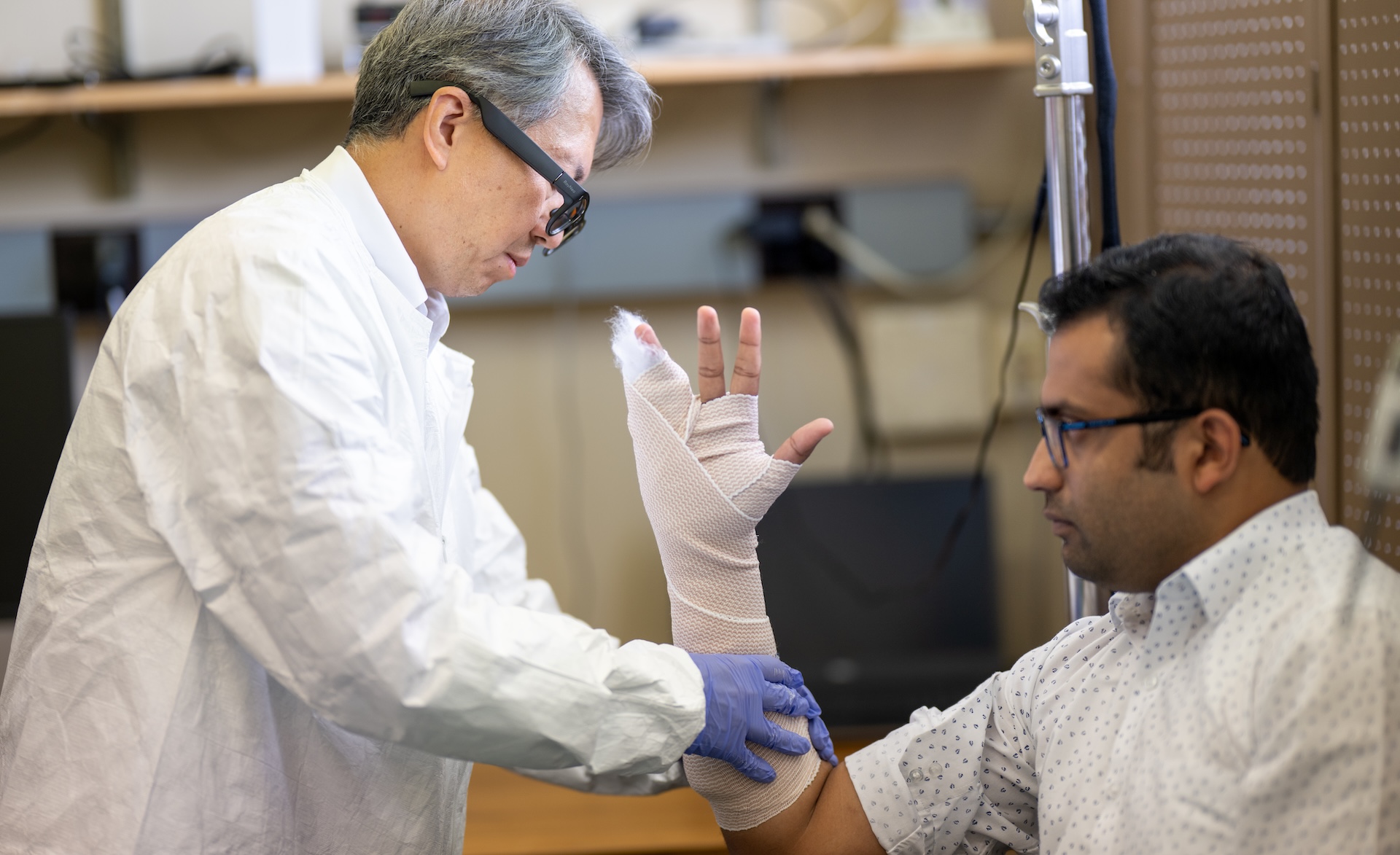
The program aims to bring care to rural areas as hospitals close.
A Thomson Reuters report details how SRI is using a $26.5 million award from the Advanced Research Projects Agency for Health (ARPA-H) to build an AI-powered “co-pilot” for rural medical care. The system uses cameras, voice recognition, and real-time prompts to guide nurses, nurse practitioners, and general clinicians through procedures that would typically require a specialist, including blood draws, basic ultrasounds, splinting, lab tests, and intubation.
The work is part of PARADIGM, a broader initiative developing mobile medical units for remote communities, with Mayo Clinic and the University of Florida joining SRI on the project. The goal is to let small clinics and medical vans offer more care close to home, cutting down on costly specialist staffing and long-distance transfers, a pressing need given that 100 rural hospitals have closed in the past decade, and roughly 600 more are at risk.
Early results are encouraging: first-year blood-draw testing found non-specialists using AI guidance were accurate 97% of the time, versus 65% without it.
SRI’s work on this project sits inside its Center for Vision Technologies, where the same task-guidance system (internally called Multi-Tags) is developed alongside other vision and sensing research the institute has delivered. It’s part of an 80-year track record for SRI, with past innovations including Siri.
Read the full article.
SRI leverages early-stage research and developmental work to build solutions that for government and commercial markets
The Center for Vision Technologies creates fundamental computer vision solutions based on leading-edge technologies, leveraging a wide variety of sensors and computation platforms.