SRI scientist Thomas Kilduff and team recognized for their seminal contributions to the hypocretin/orexin system
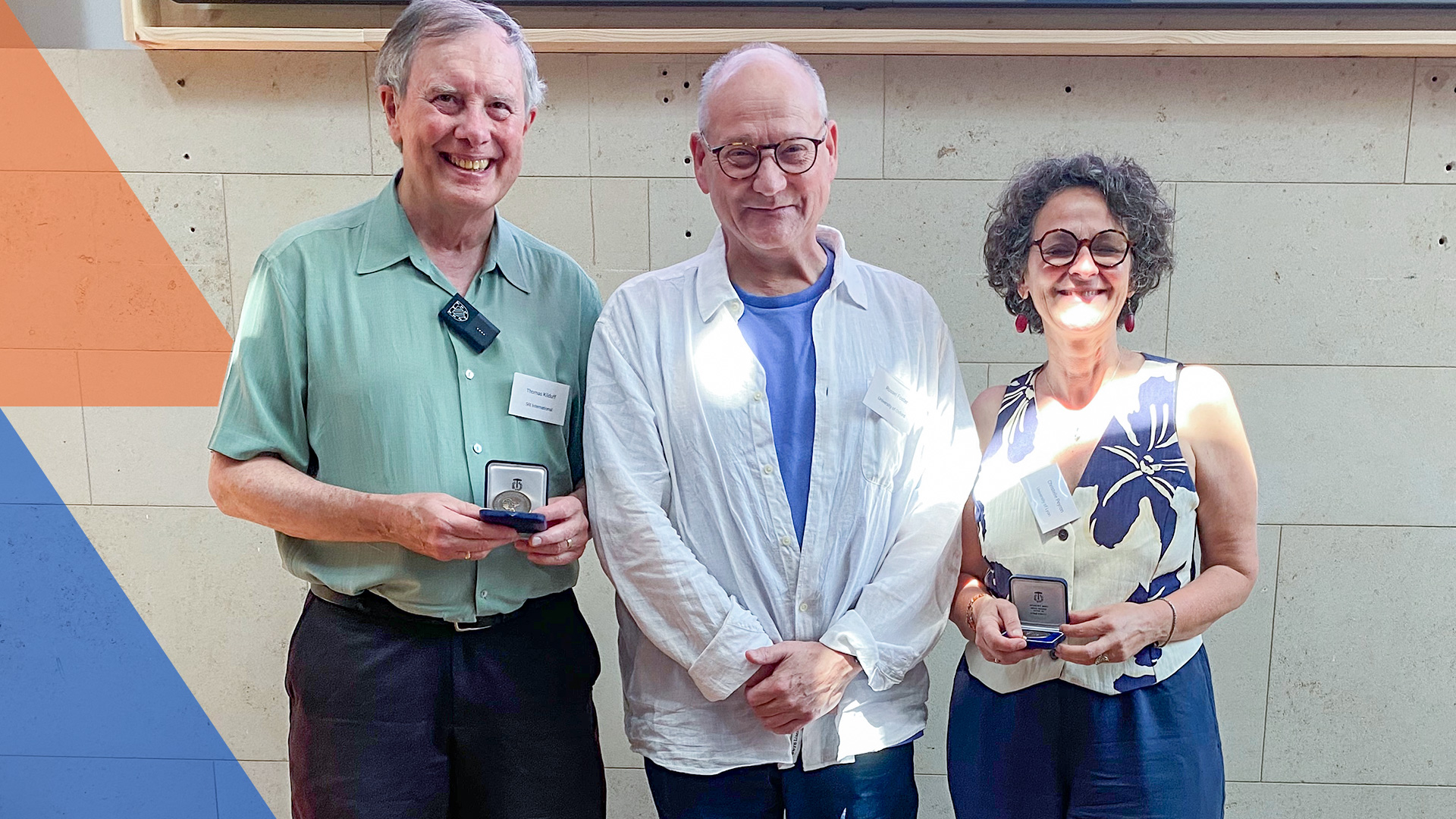
The team was awarded the SCNi Academic Prize Medal by the Sir Jules Thorn Sleep and Circadian Neuroscience Institute at the University of Oxford.
SRI neuroscientist Thomas Kilduff, Ph.D. and former postdoctoral fellow, Christelle Peyron, Ph.D., now head of the sleep team at the Center for Research in Neuroscience in Lyon, were awarded the SCNi Academic Prize Medal by the Sir Jules Thorn Sleep and Circadian Neuroscience Institute at the University of Oxford in recognition of their seminal contributions to the characterization of the hypocretin/orexin system.
The hypocretin/orexin system is critical in the maintenance of wakefulness and is dysfunctional in the sleep disorder narcolepsy. Targeting the hypocretin/orexin system by pharmaceutical companies has resulted in three FDA-approved medications for insomnia and a new “first in class” treatment for people with narcolepsy that was approved by the FDA on August 5, 2026.
Kilduff, Peyron, and his team have long been working in this area, specifically focusing on narcolepsy and the science behind what that looks like in the brain. In collaboration with scientists at the Scripps Research Institute including Luis de Lecea, Ph.D. and J. Gregor Sutcliffe, Ph.D., the team originally described the brain cells that synthesize the hypocretin/orexin peptides, mapped out where those neurons are located and where they connect in the brain – information that is critical to the development of novel treatments. Subsequent research led to the discovery that the hypocretin/orexin neurons degenerate in narcolepsy and, therefore, that replacement of the hypocretin/orexin peptides might be a new treatment strategy for narcolepsy.
“This new treatment for narcolepsy is the first that treats the core problem – the loss of the hypocretin/orexin peptides – rather than only the symptoms of the disorder” said Kilduff. “It is gratifying to see that the research that my colleagues and I were engaged in 30 years ago was fundamental to the development a new therapeutic that will help patients with this sleep disorder.”
“The SCNi Academic Prize Medal is awarded to individuals who have made an outstanding contribution to the fields of sleep and circadian rhythms research,” said Professor Russell G. Foster, director at the Sir Jules Thorn Sleep and Circadian Neuroscience Institute (SCNi). Kilduff’s research on the hypocretin/orexin system and narcolepsy has been supported by the National Institute of Neurological Diseases and Stroke (NINDS) within the National Institute of Health (NIH) and several pharmaceutical companies. In 2025, Kilduff also received a Career Award for his research in this area from the European Narcolepsy Network.
SRI brings transformative approaches and platforms
for challenging therapeutic problems
We bring together basic bioscience, applied research for early-stage IP generation,
and transnational development — moving the lab to the real world.