Author: SRI International
-

National Cyberlearning Summit Features Major Advances in Learning with Technology
On June 9 and 10, 2014, more than 100 investigators, innovators, researchers, and educators convened for a summit at the University of Wisconsin, Madison to identify and communicate major advances in learning with technology.
-

New Phase 1 Clinical Trial Unit Nears Completion in Michigan
Since early 2013, SRI Biosciences, with support from the Michigan Economic Development Corporation, has been gearing up to establish a Phase 1 clinical trial facility in Plymouth, Michigan, located squarely in the state’s “Life Sciences Corridor.” The facility will meet an important translational need for government and industry clients and partners, particularly small biotech companies that need early-stage human…
-
Multi-source anomaly detection: using across-domain and across-time peer-group consistency checks
We present robust anomaly detection in multi-dimensional data.
-
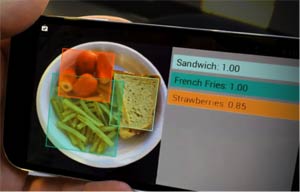
New Food Recognition Technology Lets Devices See What’s on Your Plate—To Help You Decide Whether to Eat It
Computer vision—emulation of the human visual system—is enabling groundbreaking advances that allow computers to act and react like humans. Applications for computer vision range from monitoring activities at crowded events, to warning drivers of imminent danger, to self-steered robots that can navigate objects easily. For decades, SRI’s computer vision researchers have pioneered development of technologies…
-
Articulatory Features from Deep Neural Networks and Their Role in Speech Recognition
This paper presents a deep neural network (DNN) to extract articulatory information from the speech signal and explores different ways to use such information in a continuous speech recognition task.
-
Permeability Enhancing Lipid-Based Co-Solvent and SEDDS Formulations of SQ641, an Antimycobacterial Agent
The objective of this study was to develop an oral preclinical liquid formulation of SQ641 and to determine the permeability across rat intestinal tissue by Ussing chamber.
-
Evidence for the Role of EPHX Gene Variants in Anorexia Nervosa
To identify genetic variants associated with AN, we pursued a series of sequencing and genotyping studies focusing on the coding regions and upstream sequence of 152 candidate genes in a total of 1205 AN cases and 1948 controls.
-
Implementation of an Intelligent Tutoring System for Online Homework Support at Large Scale
In this paper, we describe an ongoing randomized controlled trial (RCT) to evaluate the efficacy of a web-based tutoring system—the ASSISTments—as support for homework.
-
Implementation of an Intelligent Tutoring System for Online Homework Support in an Efficacy Trial
In this paper, we describe an ongoing randomized controlled trial (RCT) to evaluate the efficacy of a web-based tutoring system—the ASSISTments—as support for homework.
-
A Design Inquiry: Bridging Assessment and Curriculum Frameworks to Engage Students in Science Practices
This reflective inquiry delves into the collaborative design process of a technology based middle school genetics unit. With a lens on science practices, we describe how bridging assessment and curriculum design frameworks can inform decisions in an iterative co-design process.
-
Curation Accuracy of Model Organism Databases
We assessed the accuracy of EcoCyc and CGD by manually selecting curated assertions within randomly chosen EcoCyc and CGD gene pages and by then validating that the data found in the referenced publications supported those assertions.
-
Implementation Science in School Mental Health: Key Constructs in a Developing Research Agenda
In this paper, we propose an implementation science research agenda as it applies to school mental health (SMH).