SRI International
-

Research Shows Fitness Watch Can Accurately Track Sleep Patterns
Results from first study comparing consumer sleep tracker against research-grade tracker over two weeks in home environment published in Journal of Sleep.
-
Part C child find funnel chart tool
The Child Find Funnel Chart tool is an Excel template for displaying data about infants and toddlers at each step of the Part C process for a set of infants and toddlers referred within a specified time span.
-
Investigating STEM Support and Persistence Among Urban Teenage African American and Latina Girls Across Settings
This study contributes to the emerging research literature on science, technology, engineering, and mathematics (STEM) support and persistence activities among urban teenage African American and Latina girls.
-
Child find self-assessment
The Child Find Self-Assessment (CFSA) is a valuable tool for State IDEA Part C programs seeking to improve their child find efforts.
-

EduSpeak® speech recognition toolkit
EduSpeak is a speech recognition toolkit specifically designed for developers of language-learning applications (such as for English as a Second Language, or ESL) and other educational and training software.
-

Overcoming the early childhood suspension & expulsion problem
Curbing the problem starts with changing the early childhood program approach.
-
C2STEM: a System for Synergistic Learning of Physics and Computational Thinking
Synergistic learning combining computational thinking (CT) and STEM has proven to be an effective method for advancing learning and understanding in a number of STEM domains…
-
Evaluation of National Writing Project’s College-Ready Writer’s Program 2015 SEED Grant
The National Writing Project’s College, Career, and Community Writers Program provides professional development for teachers in Grades 7–10 with the goal of improving students’ source-based argument writing.
-
Emerging Leaders Program: Impacts on Students, Teachers, and Leaders in Three Sites
New Leaders partnered with SRI Education to undertake a randomized control trial of the Emerging Leaders program in three sites.
-

DynaSpeak® speech recognition engine
Hidden Markov Model (HMM)-based speech recognizer from SRI.
-
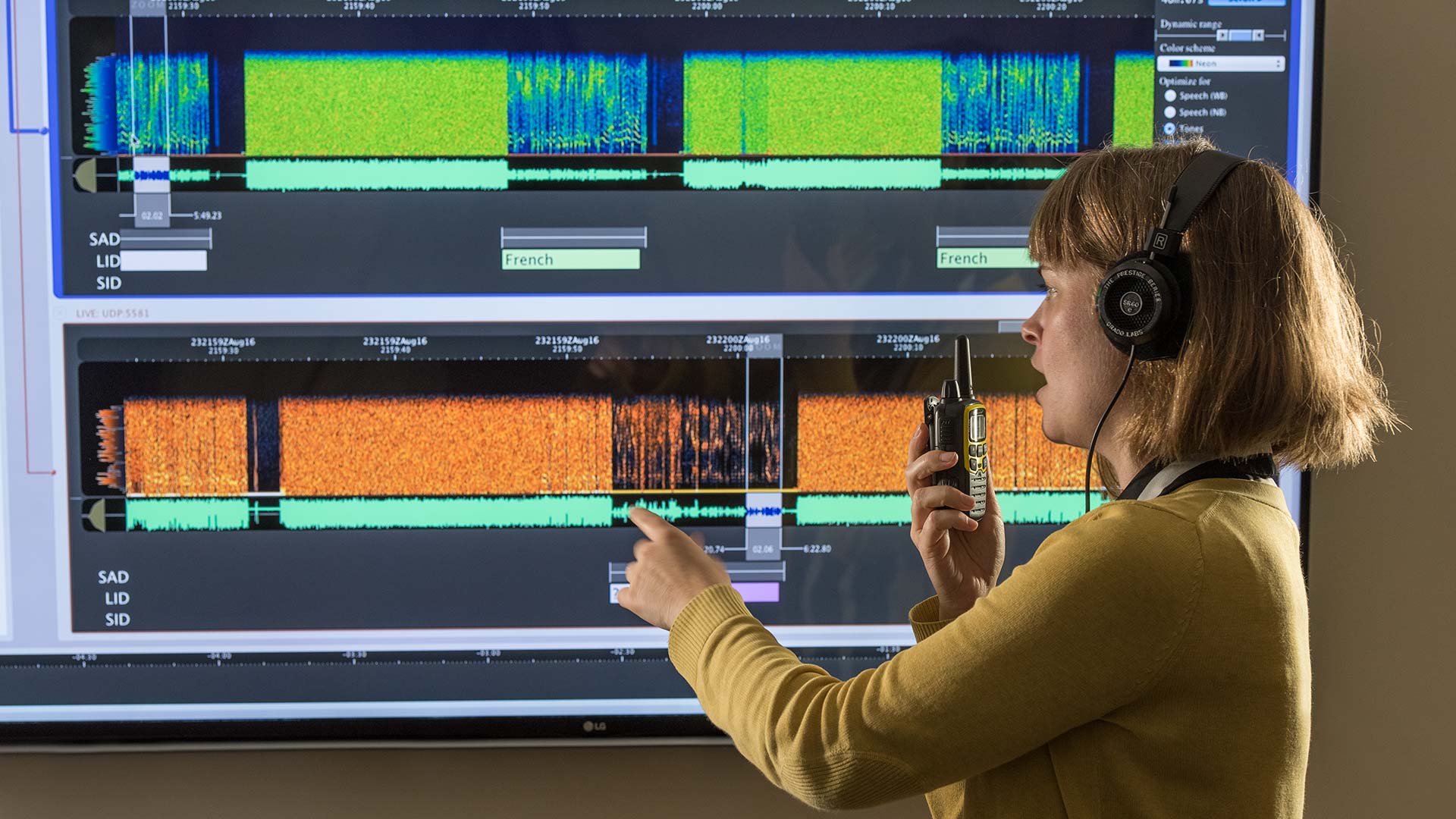
Open Language Interface for Voice Exploitation (OLIVE)
The Open Language Interface for Voice Exploitation (OLIVE) speech processing system provides robust speech information extraction amid high levels of noise and distortion in real-world data.
-
A curriculum supplement that integrates transmedia to promote early math learning: A randomized controlled trial of a PBS KIDS intervention
Over the past decade, there has been heightened national attention given to early mathematics education. Educators, policy makers, and researchers have highlighted the importance of early mathematics learning for later school success, and the resulting need for evidence-based approaches to mathematics teaching early in childhood.