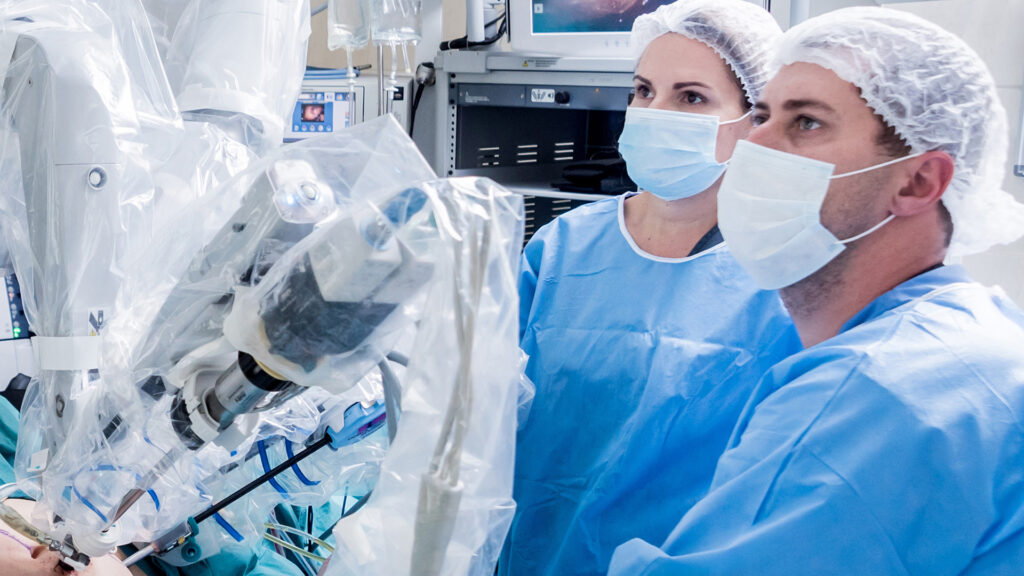
Intuitive’s da Vinci 5 system represents a major leap in robotic-assisted medicine. It all started at SRI, which continues to advance teleoperation technologies.
The recently released da Vinci 5 surgical system from Intuitive marks a major advance in robotic-assisted medicine. The platform is driven by a reported 10,000-fold increase in computing power over prior generations. This enables real-time analysis of surgical video, instrument movement, and system data, transforming the platform into a deeply intelligent teleoperation system. New features such as force feedback at the instrument tip and software that segments procedures and measures performance illustrate how teleoperations systems can now augment surgical decision-making.
These capabilities build directly on early telerobotic surgery research conducted at SRI. SRI began developing telepresence surgery with the U.S. Army in the 1980s. This work resulted in the first U.S. FDA-approved telerobotic surgical system. Intuitive, created in 1995, licensed SRI’s technology to create the initial da Vinci system. Soon, surgeons around the world were taking advantage of telerobotics to speed up patient recovery while reducing pain and complications.
SRI continues to advance the field of telerobotics. The institute’s XRGo software is bringing telerobotics capabilities to new use cases like pharmaceutical manufacturing. SRI-supported startup Medical Devices Corner, meanwhile, is leveraging a hydraulics-based approach to introduce precise, minimally invasive surgery inside MRI machines, with significant implications for cancer treatment and much more.
Four decades into the telerobotic surgery revolution that SRI initiated, SRI engineers and startups continue to discover new engineering approaches, visualization tools, and AI technologies that can improve telerobotics and drive better health outcomes.
Learn more about how SRI is inventing the future of health.


