SRI research reveals new connections between menstrual cycles and health
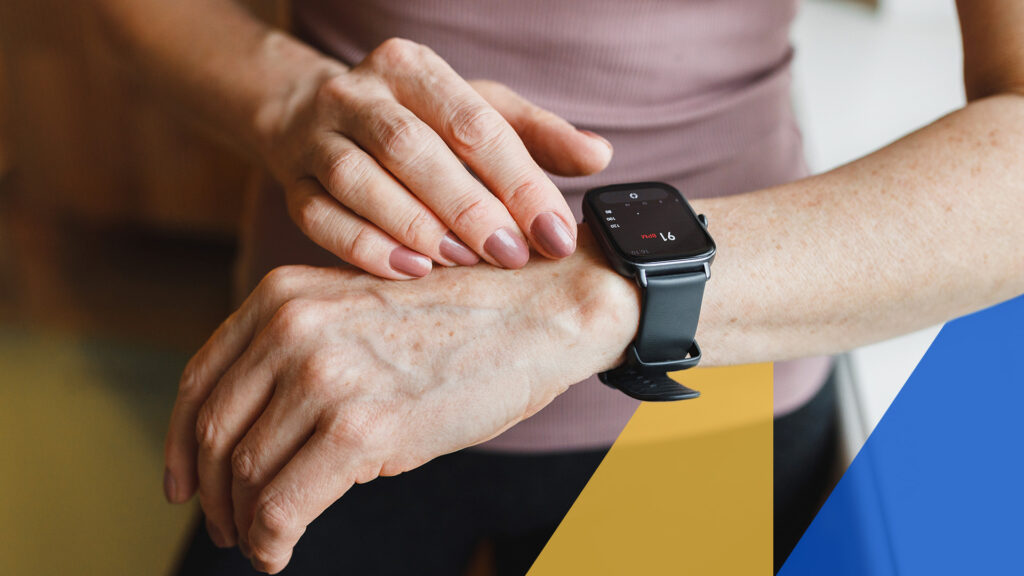
A paper published in Science Advances tracked associations between menstrual cycles and body temperature, uncovering variations with implications for women’s healthcare.
The menstrual cycle may be a much richer health signal than medicine had traditionally recognized, according to a new paper from SRI bioscience researchers published in the prestigious Science Advances journal and covered by The Times (London), New Scientist, BioWorld, and other prominent publications.
SRI’s Center for Health Sciences has become a leading source of new research about the connections between menstrual cycles and health, and women’s health more broadly. For this paper, researchers created an open-source tool called WAVES that analyzes daily body temperature data across the menstrual cycle to look for patterns that might serve as health markers. The study explored 5,674 menstrual cycles from 753 people aged 18 to 42 and found that menstrual cycle-related temperature patterns changed in meaningful ways with age.
“Instead of viewing the menstrual cycle exclusively through the lens of fertility, our research continues to uncover cyclical variations with broader implications for women’s healthcare.” — Fiona Baker
In general, older participants tended to have slightly higher average temperatures, shorter cycles, and more cycle-to-cycle variability in several temperature metrics. The study also found that some temperature features were surprisingly stable within the same person over time. In other words, individuals appeared to have their own “temperature fingerprint,” with certain menstrual metrics staying relatively consistent from cycle to cycle even as aging introduced gradual shifts.
Why does that matter? The authors suggest that menstrual cycles could become a useful source of digital biomarkers — measurable signals that help track health, aging, or disease.
“Instead of viewing the menstrual cycle exclusively through the lens of fertility, our research continues to uncover cyclical variations with broader implications for women’s healthcare,” says Fiona Baker, who directs SRI’s Center for Health Sciences and its Human Sleep Research Program. “These findings may help researchers and clinicians better monitor cyclical physiological changes to inform real-world healthcare interventions, particularly as wearable monitoring technology becomes mainstream.”
While the paper does not claim that temperature alone can diagnose disease, it makes a strong case that menstrual data, especially when tracked over time and interpreted personally rather than generically, could support a more individualized approach to women’s health.