SRI International
-

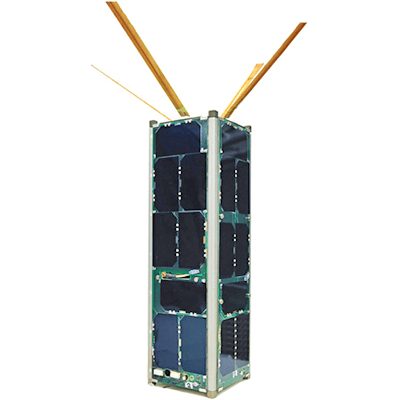
Spaceflight Industries’ SSO-A Flight Launches with SRI International’s CUBIT Technology Onboard, Developed to Track and Identify Low Earth Orbit Satellites
Over the last few years, CubeSats (miniaturized satellites) have risen in popularity due to their low cost and ability to obtain low-altitude orbits easily.
-
SRI International Demonstrates Interferometric SAR with Radar Designed for CubeSat Form Factor
Researchers from SRI International have successfully demonstrated new Interferometric Synthetic Aperture Radar (InSAR) capabilities with a radar developed for CubeSat-based earth science applications.
-
Flexible Electronics Systems and Advances (invited)
Flexible electronics offers opportunities for greatly expanding the ability to probe the environment with distributed sensors that can be incorporated into the Internet of Things (IoT).
-

SRI International awarded contract to support U.S. Army Integrated Visual Augmentation System
SRI International has received an award to deliver digital night vision camera prototypes to support the U.S. Army’s IVAS (Integrated Visual Augmentation System) program.
-
Toward Runtime Throttleable Neural Networks
This paper presents an approach to creating runtime-throttleable NNs that can adaptively balance performance and resource use in response to a control signal.
-
Changing context: Do magnet schools provide student achievement benefits in a modern setting?
To examine magnet schools in a modern context, this study utilized data from one of the nation’s largest districts and examined student achievement by looking for improvements in math and reading scores on a standardized exam.
-
Lucid Explanations Help: Using a Human-AI Image-Guessing Game to Evaluate Machine Explanation Helpfulness
We propose a Twenty-Questions style collaborative image retrieval game as a method of evaluating the efficacy of explanations (visual evidence or textual justification) in the context of Visual Question Answering.
-
Fibridge: Embedded fiber-optic sensing for low-cost, high resolution monitoring in bridges and critical structures
Under a collaboration led and supported by VicTrack, VicRoads, and other Victorian state agencies with funding from the Victoria Public Sector Innovation Fund (PSIF) in Australia, the Palo Alto Research Center (PARC) and University of Melbourne (UoM) are developing Fibridge, a fiber-optic (FO) smart monitoring system for bridges to enable predictive maintenance using the industrial…
-
Fast, Full Chip Image Stitching of Nanoscale Integrated Circuits
In this paper, we describe the algorithmic steps taken in the processing pipeline to quickly create a global image database of an entire advanced IC.
-

SRI Education News | March 2019
This month, we highlight SRI Education’s participation in current conferences
-
Exploring How to Personalize Travel Route Recommendations For Sustainable Transportation
In this work, we present a theory driven approach that combines transportation research and psychological research of personality, responsibility, and influence to understand the scope of the personalization problem for trip planning.
-
Longitudinal stability of reading profiles in individuals with higher functioning autism
The reading difficulties of individuals with autism spectrum disorders have been established in the literature, with particular attention drawn toward reading comprehension difficulties.